Monday, June 11, 2012

Former 'God’s Banker' could blitz Vatican with cache of secret documents

Pope Benedict XVI talks to the former head of the Vatican bank Ettore Gotti Tedeschi (AFP Photo/Osservatore Romano)

The former head of the Vatican Bank has become the Papacy’s Enemy Number One, after police discovered a trove of documents exposing financial misdeeds in the Holy See. The banker now reportedly fears for his life.

­Earlier this week police conducted a dawn raid on the house and office of Ettore Gotti Tedeschi. Investigators say they were looking for evidence in a graft case against defense and aerospace firm Finmeccanica, which was formerly run by a close friend of Gotti Tedeschi.

Instead, as it turns out, police stumbled upon an entirely different find.

They discovered 47 binders containing private communication exposing the opaque inner workings of the secretive Holy See.  They included financial documents, details of money transfers and confidential internal reports – all prepared by Gotti Tedeschi to build a convincing expose of corruption in the Vatican.

A renowned economics professor and head of the Italian branch of the giant Bank of Santander Gotti Tedeschi took what turned out to be a poisoned chalice of a job in 2009, when he became the President of the Institute for Works of Religion, the formal name for the Bank of Vatican. His brief was formidable – to introduce transparency to a lucrative enterprise that had become a byword for money-laundering and corruption.

After a tumultuous three years marked by in-fighting and public scandals, Gotti Tedeschi was unanimously dismissed from his post by a board of Vatican officials in May.

“I have paid for my transparency” the indignant banker said to the media, as he stormed off even before his dismissal hearing was over.

The confidential minutes of the stormy meeting obtained by Reuters showed the banker accused of "progressively erratic personal behavior" and "exhibiting lack of prudence and accuracy in comments regarding the Institute".

But there may have been other reasons.

Aware that his crusade against corruption was failing, Gotti Tedeschi probably began to leak important documents to the media.

The drip-drip of damaging revelations (alongside more personal ones presumably passed onto the media by the Pope’s own butler) has been dubbed 'Vatileaks', and has captivated Italy in recent months.

At the hearing, the board that dismissed the banker also indirectly accused Gotti Tedeschi of being behind some of the leaks, pointing to his "Failure to provide any formal explanation for the dissemination of documents last known to be in the president's possession."

While the leaks were a weapon with which to attack his enemies, Gotti Tedeschi was also preparing a last resort option if the battle was lost – a ‘suicide belt’ that would blow the lid off Vatican.

Several months ago, he reportedly told his friends that he began collecting an exhaustive dossier “in case something happened to him.”

It is this dossier that the police have now apparently discovered.

The Vatican is barely concealing its panic – and wants the folders handed back unopened.

“We have faith that the prosecutors and Italian judicial system will respect our sovereignty—recognized internationally—with regard to these documents,” said an official statement.

But there is little chance the Papacy will get its way this time.

Italian prosecutors have frequently been at loggerheads with the Vatican and have accused it of using its sovereignty as a shield against proper regulation.

If the documents do spark a legal firestorm, Ettore Gotti Tedeschi is sure to be a key witness in any trial. A former employee against his employers, and a conservative Catholic pitched against the Vatican itself.

Allegedly, Gotti Tedeschi keeps a list of personal enemies in the Vatican – people who he had felt would stop at nothing to prevent him from reforming the Institute for Works of Religion. His friends have told the media he is shaken and scared.

Police are now considering putting the whistle-blowing banker under armed protection.

Source: RT

Europe Brings Out The "Capital Controls" Bazooka

Here we go:

  • EU SOURCES HAVE DISCUSSED IMPOSING CAPITAL CONTROLS AS WORST CASE SCENARIO IF GREECE LEAVES EUROZONE - RTRS
  • IMPOSING BORDER CHECKS, LIMITING ATM WITHDRAWALS ALSO PART OF WORST-CASE SCENARIO PLANNING - EU SOURCES - RTRS
  • SUSPENSION OF SCHENGEN ALSO DISCUSSED

In other words, that money you thought you had... You don't really have it. We can only hope this message was not meant to restore confidence and prevent future bank runs. Because if Europe wanted a continental bank run, it may have just gotten one.

This is getting scary very fast.

Full piece from Reuters:

European finance officials have discussed as a worst-case scenario limiting the size of withdrawals from ATM machines, imposing border checks and introducing capital controls in at least Greece should Athens decide to leave the euro.

EU officials have told Reuters the ideas are part of a range of contingency plans. They emphasised that the discussions were merely about being prepared for any eventuality rather than planning for something they expect to happen - no one Reuters has spoken to expects Greece to leave the single currency area.

Belgium's finance minister, Steve Vanackere, said at the end of May that it was a basic function of each euro zone member state to be prepared for problems. These discussions appear to be in that vein.

But with increased political uncertainty in Greece following the inconclusive election on May 6 and ahead of a second election on June 17, there is now an increased need to have contingencies in place, the EU sources said.

The discussions have taken place in conference calls over the past six weeks, as concerns have grown that a radical-left coalition, SYRIZA, may win the second election, increasing the risk that Greece could renege on its EU/IMF bailout and therefore move closer to abandoning the currency.

No decisions have been taken on the calls, but members of the Eurogroup Working Group, which consists of euro zone deputy finance ministers and heads of treasury departments, have discussed the options in some detail, the sources said.

As well as limiting cash withdrawals and imposing capital controls, they have discussed the possibility of suspending the Schengen agreement, which allows for visa-free travel among 26 countries, including most of the European Union.

"Contingency planning is underway for a scenario under which Greece leaves," one of the sources, who has been involved in the conference calls, said. "Limited cash withdrawals from ATMs and limited movement of capital have been considered and analysed."

Another source confirmed the discussions, including that the suspension of Schengen was among the options raised.

"These are not political discussions, these are discussions among finance experts who need to be prepared for any eventuality," the second source said. "It is sensible planning, that is all, planning for the worst-case scenario."

The first official said it was still being examined whether there was a legal basis for such extreme measures.

"The Bank of Greece is not aware of any such plans," a central bank spokesman in Athens told Reuters when asked about the sources' comments.

The vast majority of Greeks - some surveys have indicated 75 to 80 percent - like the euro and want to retain the currency, something Greek politicians are aware of and which may dissuade them from pushing the country too close to the brink.

However, SYRIZA is expected to win or come a strong second on June 17. Alexis Tsipras, the party's 37-year-old leader, has said he plans to tear up or heavily renegotiate the 130-billion-euro bailout agreed with the EU and IMF. The EU and IMF have said they are not prepared to renegotiate.

If those differences cannot be resolved, the threat of the country leaving or being forced out of the euro will remain, and hence the need for contingencies to be in place.

Switzerland said last month it was considering introducing capital controls if the euro falls apart.

In a conference call on May 21, the Eurogroup Working Group told euro zone member states that they should each have a plan in place if Greece were to leave the currency.

Belgium's Vanackere said two days after that call that it was a basic function of each euro zone member state to be prepared for any eventuality.

"All the contingency plans (for Greece) come back to the same thing: to be responsible as a government is to foresee even what you hope to avoid," he told reporters.

"We must insist on efforts to avoid an exit scenario but that doesn't mean we are not preparing for eventualities.

Source: Zerohedge

World's Largest Organization for Computer Professionals Comes Out Against CISPA

The US Public Policy Council of the Association of Computing Machinery (ACM), representing ACM, came out against CISPA, the cybersecurity legislation recently passed by the US House. ACM is the world's largest organization for computer professionals. They are joining a diverse group of individuals and organizations opposing this bill, including a wide array of digital civil liberties organizations like EFF, computer scientists like Bruce Schneier and Tim Berners-Lee, and companies like the Mozilla Foundation.

CISPA is intended to protect America against cyberthreats, but destroys core privacy protections by providing vague definitions and unfettered access to personal communications by companies and government agencies. In one such example, ACM criticized the expansive definition for "cyberthreat information," which could "encompass everything from port scans to destruction of entire networks." We agree, and voiced identical concerns when CISPA was first released.

Vague definitions are accompanied by a vague standard for companies to make "reasonable efforts to limit the impact on privacy." Though the standard is well intended, ACM correctly identifies that the vague standard "fails to invoke any framework, standards, oversight, or controls to be used" for personal information. They also conclude that the bill creates "no meaningful support for collection minimization" and shares information that "could have nothing to do with cybersecurity"—problems that we have consistently highlighted in our commentary on CISPA. These large gaps in privacy protections highlight some of the core shortfalls we have voiced about CISPA.

Digital civil liberties groups, companies, and computer researchers are glad ACM joined the opposition to CISPA. The upcoming bills in the Senate share many similarities to CISPA and must be stopped. This is the reason why we vow to take the fight to the Senate, ask you to sign our petition against the Cyberspying Bills, and tweet your Congressmen.

Source: EFF Electronic Frontier Foundation

Fukushima Radiation Cleanup Flawed – ‘Just A Show’

Euro fears boost virtual currency Bitcoin

The bad news out of Europe is benefitting safe haven countries, pushing down borrowing costs for a whole swath of governments. On May 30 the yield on the benchmark 10-year U.S. Treasury slipped to 1.6%, the lowest since the Second World War.

Fearful of the future, Europeans are moving their money out of their banks and dumping it into safe havens such as U.S. Treasuries, Government of Canada bonds — and apparently the virtual currency Bitcoin. ‘We’re getting requests from people saying, can we mail you euros? We can’t do that legally, but they keep asking’

“European volume has been skyrocketing,” said Charlie Shrem, chief executive of BitInstant LLC, a company in New York that enables clients to transfer funds between Bitcoin and U.S. and Canadian dollars, British pounds, euros and other major currencies.

According to Mr. Shrem, the sudden rise has been driven by people in countries like Greece, Italy, Spain — and even the Netherlands — anxious to protect their savings.

“We’re getting requests from people literally saying, can we mail you euros? We can’t do that legally, but they keep asking.”

The bad news out of Europe is benefitting safe haven countries, pushing down borrowing costs for a whole swath of governments. On May 30 the yield on the benchmark 10-year U.S. Treasury slipped to 1.6%, the lowest since the Second World War. Ten-year bond yields in Germany, France and Canada have all hit record lows in recent weeks. Even the U.K. is getting a lift.

But why is Bitcoin caught up in the frenzy?

The darling of techies, hipsters and, increasingly, currency traders, it was created back in 2009 as an Internet-only currency regulated by a network algorithm. Traditional currencies, the thinking went, are cumbersome and expensive to use in online transactions. Every time a purchase is made, fees must be paid to a bank or credit card company. Costs are even more onerous when one currency is converted to another.

Bitcoin solved these problems and others as well, since it operates outside the payment systems operated by the banks. More importantly, it’s not under the control of any central bank or government. In fact, the supply of Bitcoins is controlled by an algorithm.

Proponents argue that makes it safer than traditional fiat currencies and essentially immune to the political pressures.

Indeed, at a time when governments around the world are pumping massive amounts of so-called fiscal stimulus into the economy, potentially setting the stage for untold inflation down the road, it’s not surprising that Bitcoin is suddenly attracting a lot of attention, as are other digital currencies.

For fans of the currency, it’s hard to imagine a better way to shelter your savings from the ravages of the gales that are blowing through global financial markets.

But it’s not the only alternative currency that’s garnering attention.

Second Life, a popular online game, has its own cyber money, known as linden dollars. Originally intended for use only within the game, linden dollars have morphed into a real currency that is becoming widely used across the internet by real consumers.

Earlier this year the Canadian Mint announced a project to create its own digital money, MintChip. Analysts call it a positive sign, since it shows that even the government has recognized the importance of digital currency.

So far though, the concept mostly remains a work in progress. Almost since its creation, Bitcoin has been wrestling with hurdles, including software bugs and, more worryingly, hacker attacks. Last June, Mount Gox, one of the biggest Bitcoin exchanges, suffered a security breach with hackers reportedly making off with thousands of account passwords and a substantial amount of Bitcoin money, inflicting a huge blow to user confidence.

Since then the value has recovered somewhat — it was trading around US$4 in April. But amid renewed fears around the eurozone it’s been on a steady upward trajectory, climbing from around $5.20 at the start of June to an intraday high of $5.65 on Friday.

Source: Financial Post

Sunday, June 10, 2012

Beware the spy in the sky: After those Street View snoopers, Google and Apple use planes that can film you sunbathing in your back garden

Spy planes able to photograph sunbathers in their back gardens are being deployed by Google and Apple.

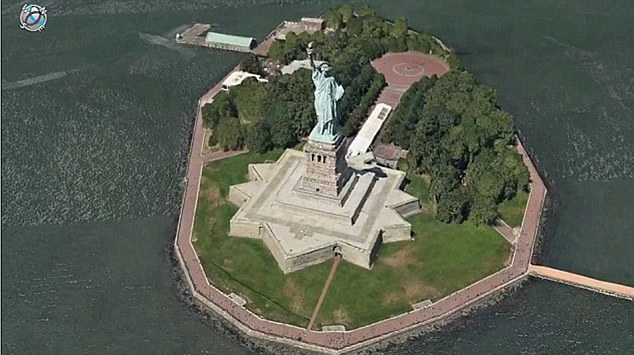
The U.S. technology giants are racing to produce aerial maps so detailed they can show up objects just four inches wide.

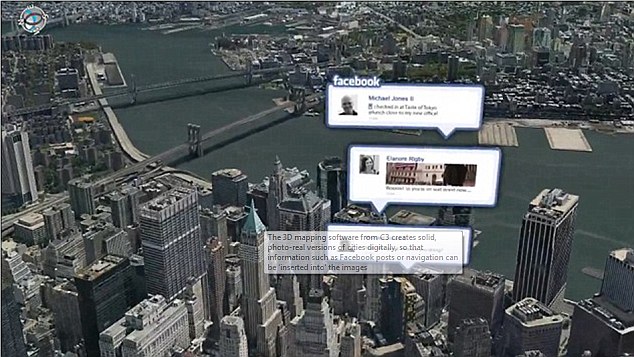
But campaigners say the technology is a sinister development that brings the surveillance society a step closer. Hyper-real: 3D mapping services used by C3 Technologies (as purchased by Apple) will form the main part of the software giant's new mapping service

Google admits it has already sent planes over cities while Apple has acquired a firm using spy-in-the-sky technology that has been tested on at least 20 locations, including London.

Apple’s military-grade cameras are understood to be so powerful they could potentially see into homes through skylights and windows. The technology is similar to that used by intelligence agencies in identifying terrorist targets in Afghanistan.

Google will use its spy planes to help create 3D maps with much more detail than its satellite-derived Google Earth images.

Nick Pickles, director of Big Brother Watch, warned that privacy risked being sacrificed in a commercial ‘race to the bottom’.

‘The next generation of maps is taking us over the garden fence,’ he warned. ‘You won’t be able to sunbathe in your garden without worrying about an Apple or Google plane buzzing overhead taking pictures.’

He said householders should be asked for their consent before images of their homes go online. Apple is expected to unveil its new mapping applications for its iPhone and other devices today – along with privacy safeguards. Its 3D maps will reportedly show for the first time the sides of tall buildings, such as the Big Ben clock tower.

Google expects by the end of the year to have 3D coverage of towns and cities with a combined population of 300million. It has not revealed any locations so far.

Current 3D mapping technology relies on aerial images taken at a much lower resolution than the technology Apple is thought to be using. This means that when users ‘zoom in’, details tend to be lost because of the poor image quality.

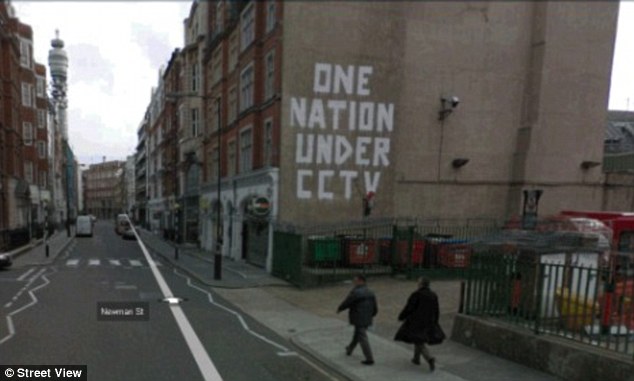
Google ran into trouble when it emerged that its Street View cars, which gathered ground-level panoramic photographs for Google Maps, had also harvested personal data from household wifi networks.

Apple’s spy planes are believed to be equipped with technology developed by defence agencies to guide missile strikes.

Each plane is equipped with multiple cameras taking high-resolution photographs of buildings and landmarks from every possible angle, which are then compiled to make three-dimensional images.

The military-grade images are taken at a height of around 1,600ft, meaning people below are very unlikely to realise they are being photographed.

The cameras can be installed on planes, helicopters or even unmanned drones, although there are safety restrictions about the use of the latter in Britain.

A small plane carrying the cameras can photograph up to 100 square kilometres (38.6 square miles) every hour. pugh

Google claimed it was a mistake even though a senior manager was warned as early as 2007 that the extra information was being captured. Around one in four home networks is thought to be unsecured because they lack password protection.

Little has been revealed about the technology involved in the spy planes used to capture the aerial images.

But they are thought to be able to photograph around 40 square miles every hour, suggesting they would be flying too quickly and at too great a height to access domestic wifi networks. Like Google Maps, the resulting images would not be streamed live to computers but would provide a snapshot image of the moment the camera passed by.

Google pixellates faces and car number plates but faced criticism after its service showed one recognisable man leaving a sex shop and another being sick in the street.

Amie Stepanovich, of the Electronic Privacy Information Centre in America, said she believed Apple and Google would be forced to blur out homes in the same way Street View pixellates faces.

She said: ‘With satellite images, privacy is built in because you can’t zoom down into a garden. Homeowners need to be asked to opt in to show their property in high definition – otherwise it should be blurred out.’

Apple has previously used Google for its mapping services but last year it emerged it had bought C3 Technologies, a 3D mapping company that uses technology developed by Saab AB, the aerospace and defence company.

At the time C3 had already mapped 20 cities and it is believed to have added more with Apple’s backing. Its photographs have been shot from 1,600ft and one C3 executive described it as ‘Google on steroids’.

There are already 3D maps available online for most big city centres, but the images are often low resolution, meaning they are of little use for navigation and users cannot zoom in on detail. Critics have argued that Apple and Google will face a backlash if they offer detailed 3D mapping of residential areas in suburbs and rural locations.

Source: Daily Mail

Saturday, June 9, 2012

Cancer Causing Ingredients in Sunscreen Omitted in FDA Labeling Guidelines

In May of this year, the Food and Drug Administration (FDA) made public that they were delaying their own regulations in deference to manufacturers' concerns that sunscreen would be available for summer; without concern for public safety.

The FDA did set forth new and more stringent guidelines on labeling sunscreen products. Manufacturers complained, however, that these new rules would impede their ability to make sure there would not be a shortage on sunscreen for 2012.

Farah Ahmed, who chairs the sunscreen task force at the Personal Care Products Council (PCPC) said: “We asked for the additional time.”

Ahmed complained that altering labels on thousands of sunscreen products “is a huge undertaking”. While the FDA has agreed to allow corporations more than ample time to comply, Ahmed warns that these new guidelines would be the direct cause if there were shortages of sunscreen available to consumers this summer.

The PCPC lobbied the FDA for more time on behalf of the sunscreen corporations. Erica Jefferson, an FDA spokesperson, said that the agency caved to the pressure and extended their compliance deadline to December 2012. Small corporations have an even bigger break; they do not have to comply with the FDA until December of 2013.

Jefferson explained that the sunscreen corporations threatened that “some manufacturers might have stopped making broad-spectrum products until they could comply.”

Sonya Lunder, a senior analyst with the Environmental Working Group, an advocacy group that promoted the stricter guidelines onto the FDA commented on the delay as “incredibly frustrating . . . Consumers need clear information about the limitations of sunscreen and can’t wait another season for these improvements to reach store shelves.”

According to the FDA, ultraviolet A rays cause cancer. UVB radiation is primarily accepted as the cause of cancer in mainstream medicine. Most of the sunscreen available on the consumer market only protects against ultraviolet B radiation.

New labeling guidelines from the FDA require the product protect against both A and B ultraviolet rays. This would be called broad-spectrum coverage.

Labels are set to include FDA authorized declarations about which products protect only against sunburn and which claim to help prevent skin cancer.

Many chemical ingredients found in sunscreen are prohibited by the FDA.

  • Benzophenone-3 (BZ3) or Oxybenzone is very hazardous, according to the Centers for Disease Control and Prevention (CDC). BZ3 is on the list of Registry of Toxic Effects of Chemical Substances (RTECS) because the chemical can be absorbed through the skin and causes endocrine disruption . BZ3 is found in sunscreen moisturizer, lip balm and children’s sunscreen. Synthetic versions of BZ3 are a direct causation of leucocytosis, anemia, and can reduce organ weight and both chronic/sub-chronic oral toxicity.
  • Benzophenone-2 (BZ2) is a cancer-causing agent used as a fragrance in sunscreen, according to the European Commission in Endocrine Disruption (ECED). BZ2 is not approved by the FDA for use in the US because it is linked to hormonal disruption in humans and animals. High doses cause immunomodulatory effects, which worsens with higher frequency use. The RTECS also classifies BZ2 as a mutagenic toxic substance.
  • Para-Aminoabenzoic Acid (PABA) is a known carcinogen. Sunscreen manufacturers claim to only be using PABA’s derivatives. The FDA has approved PABA to be used in “limited use”. The RTECS is concerned about PABA’s effects on humans, although there are not sufficient studies to date to corroborate their apprehensions because the chemical is synthetic.
  • Octyl Methoxycinnamate (OM) is the most prevalent ingredient in sunscreen and is a human endocrine disruptor, according to the ECED. In Japan, their Standards for Cosmetics have banned its use. OM causes cell mutations, liver, photoallergic effects, liver effects and wildlife and environmental toxicity.
Dangerous exposure to toxic ingredients depends on the consumer’s frequency of use.

Hidden dangers of sunscreen include:

  • Most sunscreens break down and become ineffective after extensive exposure to the sun
  • Thirty-eight percent of sunscreens are misbranded by the FDA
  • Cancer-causing ingredients do not have to be included in the labeling
Coinciding with increased sales of sunscreen are the rates of skin cancer. Caution should be used to avoid over exposure, but as an increasing number of people show vitamin D deficiency, it may be that the pendulum has swung too far the other way.

Recently, synthetic vitamin D supplements in the form of pills have been promoted.

Exposure to the sun and sunlight on a regular basis promotes the natural manufacture of Vitamin D within the body, without the need or use of synthetic vitamin D.


Susanne Posel is the Chief Editor of Occupy Corporatism. Our alternative news site is dedicated to reporting the news as it actually happens; not as it is spun by the corporately funded mainstream media. You can find us on our Facebook page .

Source: Activist Post