Thursday, August 22, 2013

West Coast of North America to Be Hit Hard by Fukushima Radiation

Radiation Levels Will Concentrate in Pockets In Baja California and Other West Coast Locations

An ocean current called the North Pacific Gyre is bringing Japanese radiation to the West Coast of North America:
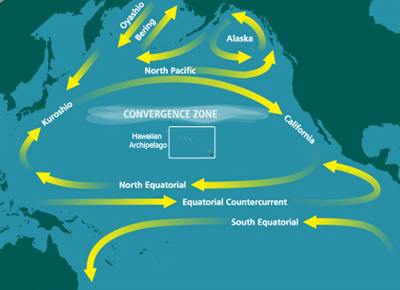
North Pacific Subtropical Convergence Zone FDA Refuses to Test Fish for Radioactivity ... Government Pretends Radioactive Fish Is Safe

While many people assume that the ocean will dilute the Fukushima radiation, a previously-secret 1955 U.S. government report concluded that the ocean may not adequately dilute radiation from nuclear accidents, and there could be “pockets” and “streams” of highly-concentrated radiation.

The University of Hawaii’s International Pacific Research Center created a graphic showing the projected dispersion of debris from Japan:

Last year, scientists from the National Oceanic and Atmospheric Administration’s (NOAA) Pacific Marine Environmental Laboratory and 3 scientists from the GEOMAR Research Center for Marine Geosciences showed that radiation on the West Coast of North America could end up being 10 times higher than in Japan:

p>After 10 years the concentrations become nearly homogeneous over the whole Pacific, with higher values in the east, extending along the North American coast with a maximum (~1 × 10⁻⁴) off Baja California. 

***

With caution given to the various idealizations (unknown actual oceanic state during release, unknown release area, no biological effects included, see section 3.4), the following conclusions may be drawn. (i) Dilution due to swift horizontal and vertical dispersion in the vicinity of the energetic Kuroshio regime leads to a rapid decrease of radioactivity levels during the first 2 years, with a decline of near-surface peak concentrations to values around 10 Bq m−3 (based on a total input of 10 PBq). The strong lateral dispersion, related to the vigorous eddy fields in the mid-latitude western Pacific, appears significantly under-estimated in the non-eddying (0.5°) model version. (ii) The subsequent pace of dilution is strongly reduced, owing to the eastward advection of the main tracer cloud towards the much less energetic areas of the central and eastern North Pacific. (iii) The magnitude of additional peak radioactivity should drop to values comparable to the pre-Fukushima levels after 6–9 years (i.e. total peak concentrations would then have declined below twice pre-Fukushima levels). (iv) By then the tracer cloud will span almost the entire North Pacific, with peak concentrations off the North American coast an order-of-magnitude higher than in the western Pacific.

***

(“Order-of-magnitude” is a scientific term which means 10 times higher.  The “Western Pacific” means Japan’s East Coast.)

In May, a team of scientists from Spain, Australia and France concluded that the radioactive cesium would look more like this:

And a team of top Chinese scientists has just published a study in the Science China Earth Sciences journal showing that Fukushima nuclear pollution is becoming more concentrated as it approaches the West Coast of the United States, that the plume crosses the ocean in a nearly straight line toward North America, and that it appears to stay together with little dispersion:

p>On March 30, 2011, the Japan Central News Agency reported the monitored radioactive pollutions that were 4000 times higher than the standard level. Whether or not these nuclear pollutants will be transported to the Pacific-neighboring countries through oceanic circulations becomes a world-wide concern.

***

The time scale of the nuclear pollutants reaching the west coast of America is 3.2 years if it is estimated using the surface drifting buoys and 3.9 years if it is estimated using the nuclear pollutant particulate tracers.

***

p>The half life of cesium-137 is so long that it produces more damage to human. Figure 4 gives the examples of the distribution of the impact strength of Cesium-137 at year 1.5 (panel (a)), year 3.5 (panel (b)), and year 4 (panel (c)).

***

It is worth noting that due to the current near the shore cannot be well reconstructed by the global ocean reanalysis, some nuclear pollutant particulate tracers may come to rest in near shore area, which may result in additional uncertainty in the estimation of the impact strength.

***

Since the major transport mechanism of nuclear pollutants for the west coast of America is the Kuroshio-extension currents, after four years, the impact strength of Cesium-137 in the west coast area of America is as high as 4%.

Say Goodbye to Skype

Say Goodbye to Skype

Yes, it’s time to say goodbye to Skype. It was a great idea, and it still operates well, but it’s time to sever ties.

Not only is Skype plugged directly in to the surveillance grid, but the company is actively contributing to the most complete surveillance system in the history of mankind.

Here’s what has happened recently to Skype, which was originally a fairly secure (encrypted, peer-to-peer) system:

·       In 2009, Microsoft filed a patent on technology for spying on Skype. (Before they bought it!)

·       In November 2010, it was learned that a flaw in Skype allowed hackers to secretly record user IP addresses. As of a few months ago, it still wasn’t fixed.

·       It has been known since 2012 that Skype has made online chats and other user information available to police. (Not just to the Feds, but to local cops.)

·       Skype also allows local cops to examine your addresses and credit card numbers.

·       In November 2012, Skype was reported to have handed over user data of a pro-Wikileaks activist to a private security company called iSIGHT Partners, without a warrant or court order. Once this was revealed, Skype said that they would conduct “an internal investigation.” 

·       In May 2013, it was documented that a URL sent via a Skype instant messaging session was usurped by the Skype service and subsequently used by Microsoft headquarters for information retrieval.

·       Skype, as a participant in the PRISM program, gives the NSA unfettered access to its data center.

I think it is clear that Skype is a surveillance-gathering tool for Big Brother in the first place, and a telephone system second. Yes, it still works, but you can be very certain that Skype is feeding every piece of information about you, the people you talk to, and the people that they talk to, directly to the overlords in DC… and to God knows who else.

These guys are not your friends.

The Replacements

Saying goodbye to Skype means that you need new methods of chatting and talking. No problem – you have options.

We’ll start with chat. Here you have two good choices:

#1 Pidgin

Get the Pidgin is a good chat program which allows you to chat on multiple networks simultaneously. It works with AIM, ICQ, Google Talk, Jabber/XMPP, MSN Messenger and many others.

Pidgin runs on Windows, Linux, and other UNIX operating systems. A version called Adium works with Mac OS.

When using Pidgin, you and your chat partners should also use Pidgin’s OTR (Off-the-Record) plugin, which will give you strong encryption.

Note: Gmail’s Google Chat “Off the Record” is not the Off-the-Record messaging we are talking about here. (Remember, Google and Facebook can only exist by trashing privacy.) Gmail’s “Off the Record” chats are not encrypted, and are all but certainly logged.

Cryptohippie

The very best way to chat is to do it inside of an anonymity network, which prevents outsiders from seeing who is chatting with, not just what they say. (Pidgin protects the content of your chats, but who you chat with, for how long and for how often, can be seen.)

The only full-spectrum anonymity network is Cryptohippie. Chat is built in to their standard Road Warrior accounts (as are secure email and anonymous voice). You can read the chat section of their FAQ here.

VoIP

Voice conversations over the Internet are called VoIP (voice over IP). One good VoIP system is Jitsi. Jitsi uses the same protocols as many chat systems, but sends voice instead of text.

The first time you connect with someone using Jitsi, you’ll have to go through an authentication process, to verify that no one is trying to spoof identities. But once you’re done authenticating, you shouldn’t have to do it again. Call quality won’t match that of a wired telephone, but it is more than good enough.

If you want to call regular telephones from your computer using VoIP, you can use a service like DiamondCard. If you pay them anonymously (with Pecunix or Bitcoin), you will retain your privacy… except for whatever you say in your conversations, of course. Remember that all standard telephone conversations are likely to be recorded these days. Big Brother is here, now.

The best option, however, is Cryptohippie‘s new voice system inside their anonymity network. That means that you can speak to your friends and associates through an encrypted, anonymous connection. Not only can’t the call be understood by anyone else, but no one will know who you talked to, for how long, or when.

This system works via computer, but it also works with smartphones. That means that you can be truly secure while talking on your cell phone.

The system actually functions more like a chat system than a regular phone, but it is very easy to use on either computers or mobiles.

Obviously, only calls between Cryptohippie users will remain anonymous. During conversations outside of the network your location would be masked, but your conversation would be accessible to snoops on the other end.

Instructions can be found on the Cryptohippie support Wiki, here.

Source: Global Wealth Protection

Wednesday, August 7, 2013

The mystery of Kazakhstan's pentagram

The bizarre symbol over 1,000 feet in diameter lies miles away from the nearest city.

Pentagram in Kazakhstan

This strange pentagram, etched into the Earth's surface in a remote corner of Kazakhstan, can be seen on Google Maps.

Conspiracy theorists, start your engines: On the wind-blown steppes of central Asia, in an isolated corner of Kazakhstan, there's a large pentagram etched into the Earth's surface. And now an archaeologist has revealed the source of the mysterious structure.

The five-pointed star surrounded by a circle, located on the southern shore of the Upper Tobol Reservoir, shows up vividly on Google Maps. There are almost no other signs of human habitation in the area; the closest settlement is the city of Lisakovsk, about 12 miles (20 kilometers) to the east.

The region surrounding Lisakovsk is riddled with ancient archaeological ruins. Bronze Age settlements, cemeteries and burial grounds — many of which have yet to be explored — dot the windswept landscape. [10 Strangest Sights on Google Earth]

What is this bizarre symbol, measuring roughly 1,200 feet (366 meters) in diameter, doing on the side of a desolate lake in northern Kazakhstan? Naturally, many online comments have already linked the site with devil worship, nefarious religious sects or denizens of the underworld. 

It certainly doesn't help that, upon zooming into the center of the pentagram, viewers will see two places highlighted by previous visitors to Google Maps: One spot is called Adam, the other, Lucifer — a name often linked to Satan.

The pentagram is an ancient symbol used by many (non-Satanic) cultures and religious groups. It has been adopted by the Mesopotamians, Pythagoreans (followers of Pythagoras, the ancient Greek mathematician), Christians, Freemasons and Wiccans.

The Kazakh pentagram certainly isn't the first odd discovery gleaned from Google Maps. Etched onto the desert floor of New Mexico are two large diamonds surrounded by a pair of overlapping circles. This is reportedly the site of a hidden bunker belonging to the Church of Scientology, according to the author of a book on the religious group.

Deep in the Gobi Desert, viewers of Google Maps can find a Yagi antenna array, a device that looks like a giant piece of cracked glass but is used for atmospheric research. And in a remote corner of Nevada, there's an enormous KFC advertisement, featuring the smiling face of Colonel Sanders.

Though it's difficult to discern from an aerial photograph exactly what the Kazakh pentagram is, Emma Usmanova, an archaeologist with years of experience working in the Lisakovsk area, has an answer.

"It is the outline of a park made in the form of a star," Usmanova told LiveScience. The star was a popular symbol during the Soviet era (Kazakhstan was a part of the former Soviet Union until its dissolution in 1991). Stars were often used throughout the Soviet Union to decorate building facades, flags and monuments. (Several online comments had suggested the star shape was the abandoned site of a Soviet-era lakeside campground.)

The star in the Soviet-era lakeside park is marked by roadways that are now lined with trees, Usmanova explained, which make the star shape even more distinct in aerial photos. Additional images of the site, now abandoned and overgrown with weeds, can be seen at englishrussia.com.

Source: Mother Nature Network

McDonalds removes chemical ammonium hydroxide from hamburger recipe


(http://documentarylovers.com)After Chef Jamie Oliver showed how McDonald's makes its hamburgers, the franchise announced that it will change its recipe.

According to Oliver, the fatty parts of beef are "washed" in ammonium hydroxide and used in the filling of the burger. He says, "Basically, we're taking a product that would be sold in the cheapest way for dogs, and after this process, is being given to human beings."

Besides the low quality of the meat, the ammonium hydroxide is harmful to health. Oliver calls it "the pink slime process."

"Why would any sensible human being put meat filled with ammonia in the mouths of their children?" asked the chef, who wages a war against the fast food industry.

In one initiative to get kids to eat healthier, Oliver demonstrated the process of how McDonald's makes its chicken nuggets. After selecting the best parts of the chicken, the remains (fat, skin, and internal organs) are processed for these fried foods.

Fast food companies Burger King and Taco Bell have already abandoned their use of ammonia in food products in the United States. Ammonium hydroxide is used in the food industry as an anti-microbial agent in meats, allowing them to sell what would otherwise be "inedible meat."

Because ammonium hydroxide is used as a "component in a production procedure" and not an official ingredient, companies are not required by the USDA to let consumers know when it is used in their food.

McDonalds has denied a link between James Oliver's campaign and their decision to change their recipe.

Source: Natural News

Burger grown from cow stem cells in laboratory put to taste test in London

For $332,000, you might expect a burger to come with fries and a shake.

But it's no ordinary hamburger that two volunteer taste-testers tucked into in London on Monday. The meat was grown in a laboratory, from cattle stem cells.

The perfectly round patty was pan fried in sunflower oil and butter and then sampled by Josh Schonwald, author of The Taste of Tomorrow, and food scientist Hanni Rutzler.

It was "close to meat," according to Rutzler, but she said she expected it to be softer and as the petri-dish beef contains no fat, it wasn't very juicy.

Schonwald also noted the absence of fat, which translated into a lesser flavor, "but the bite feels like a conventional hamburger"

Mark Post, whose team at Maastricht University in the Netherlands developed the burger, hopes that making meat in labs could eventually help feed the world and fight climate change.

Monday's taste test, coming after five years of research, is a key step toward making lab meat a culinary phenomenon.

"For the burger to succeed it has to look, feel and taste like the real thing," Post said.

Post and colleagues made the meat from the muscle cells of two organic cows. The cells were put into a nutrient solution to help them develop into muscle tissue, growing into small strands of meat.

It took nearly 20,000 strands to make one 5-ounce patty, which for Monday's taste test was seasoned with salt, egg powder, breadcrumbs, red beet juice and saffron. The project cost $332,000.

"I'm a vegetarian, but I would be first in line to try this," said Jonathan Garlick, a stem cell researcher at Tufts University School of Dental Medicine in Boston. He has used similar techniques to make human skin but wasn't involved in the burger research.

Experts say new ways of producing meat are needed to satisfy growing carnivorous appetites without exhausting resources. By 2050, the Food and Agriculture Organization predicts global meat consumption will double as more people in developing countries can afford it. Raising animals destined for the dinner table takes up about 70 percent of all agricultural land.

The animal rights group PETA has thrown its support behind the lab-meat initiative.

"As long as there's anybody who's willing to kill a chicken, a cow or a pig to make their meal, we are all for this," said Ingrid Newkirk, PETA's president and co-founder. "Instead of the millions and billions (of animals) being slaughtered now, we could just clone a few cells to make burgers or chops."

If the burger doesn't taste right, some scientists say the flavor can easily be tweaked.

"Taste is the least (important) problem since this could be controlled by letting some of the stem cells develop into fat cells," said Stig Omholt, director of biotechnology at the Norwegian University of Life Sciences. Adding fat to the burgers this way would probably be healthier than getting it from naturally chunky cows, said Omholt, who was not involved in the project.

Post and his colleagues have tasted the meat in the lab, and he said they cooked a test burger on Sunday.

Even if tweaks improved the taste of the lab-grown meat, it would be years before such burgers hit the market.

"The first (lab-made) meat products are going to be very exclusive," said Isha Datar, director of New Harvest, an international nonprofit that promotes meat alternatives. "These burgers won't be in Happy Meals before someone rich and famous is eating them."

Poisoned By Plastic

Fukushima Emergency: Plant leaks 300 TONS of radioactive water daily – World’s oceans at risk

The Japanese Prime Minister has ordered the government to step in and help contain ongoing radiation leaks from the Fukushima power plant. Tepco – the company that runs the facility that was crippled in the 2011 tsunami and earthquake – has been unable to prevent contaminated groundwater from breaching a barrier and pouring into the ocean. Nuclear energy expert Malcolm Grimston joins RT to discuss.