Friday, April 26, 2013

‘Lost’ report exposes Brazilian Indian genocide

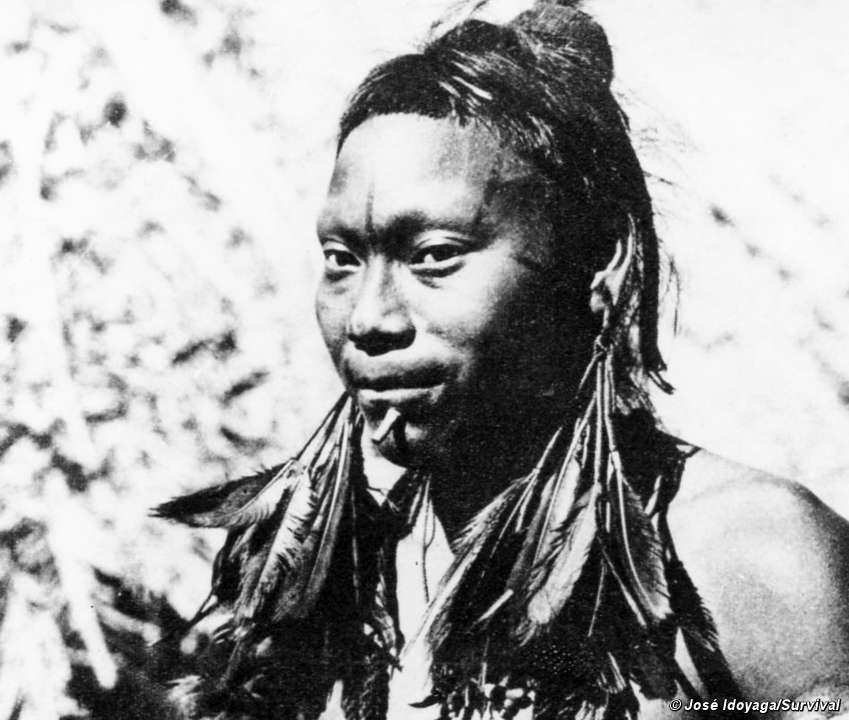
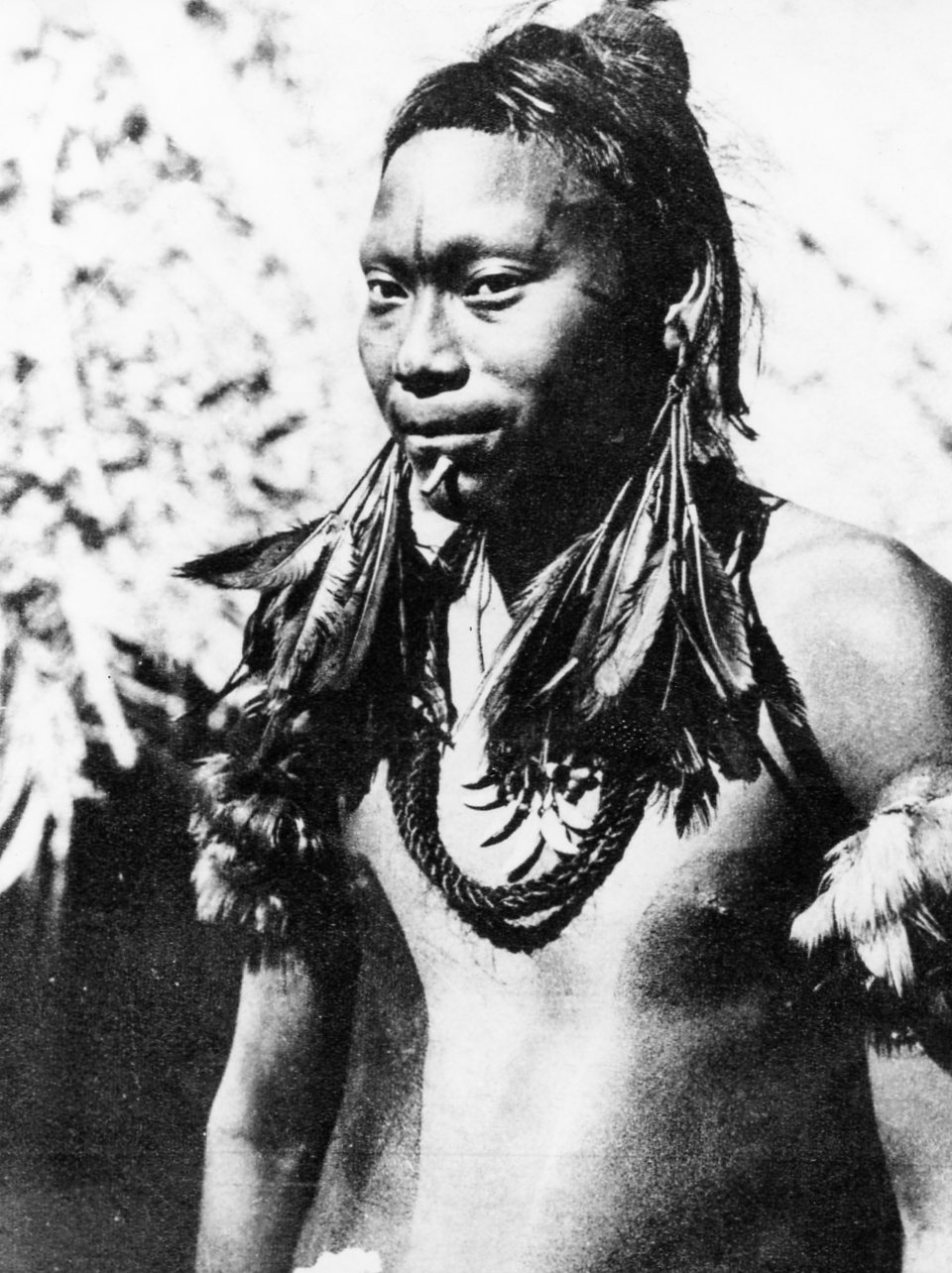
Umutima shaman in 1957. In 1969 most of the Umutima were wiped out by a flu epidemic.
© José Idoyaga/Survival

A shocking report detailing horrific atrocities committed against Brazilian Indians in the 1940s, 50s and 60s has resurfaced – 45 years after it was mysteriously ‘destroyed’ in a fire.

The Figueiredo report was commissioned by the Minister of the Interior in 1967 and caused an international outcry after it revealed crimes against Brazil’s indigenous population at the hands of powerful landowners and the government’s own Indian Protection Service (SPI). The report led to the foundation of tribal rights organization Survival International two years later.

The 7,000-page document, compiled by public prosecutor Jader de Figueiredo Correia, detailed mass murder, torture, enslavement, bacteriological warfare, sexual abuse, land theft and neglect waged against Brazil’s indigenous population. Some tribes were completely wiped out as a result and many more were decimated.

The report was recently rediscovered in Brazil’s Museum of the Indian and will now be considered by Brazil’s National Truth Commission, which is investigating human rights violations which occurred between 1947 and 1988.

One of the many gruesome examples in the report describes the ‘massacre of the 11th parallel’, in which dynamite was thrown from a small plane onto the village of ‘Cinta Larga’ Indians below. Thirty Indians were killed – just two survived to tell the tale.

A Karajá couple with their baby, who has died of flu.
© Jesco von Puttkamer/ IGPA archive

Other examples include the poisoning of hundreds of Indians with sugar laced with arsenic, and severe methods of torture such as slowly crushing the victims’ ankles with an instrument known as the ‘trunk’.

Figueiredo’s findings led to an international outcry. In a 1969 article ‘Genocide’ in the British Sunday Times based on the report, writer Norman Lewis wrote, ‘From fire and sword to arsenic and bullets – civilisation has sent six million Indians to extinction.’ The article moved a small group of concerned citizens to set up Survival International the same year.

As a result of the report, Brazil launched a judicial enquiry, and 134 officials were charged with over 1,000 crimes. Thirty-eight officials were dismissed, but no-one was ever jailed for the atrocities.

The SPI was subsequently disbanded and replaced by FUNAI, Brazil’s National Indian Foundation. But while large swathes of Indian land have since been demarcated and protected, Brazil’s tribes continue to battle the invasion and destruction of their lands by illegal loggers, ranchers and settlers and the loss of land from the government’s aggressive growth program which aims to construct dozens of large hydroelectric dams and open up large-scale mining in their territories.

Survival International’s Director Stephen Corry said today, ‘The Figueiredo report makes gruesome reading, but in one way, nothing has changed: when it comes to the murder of Indians, impunity reigns. Gunmen routinely kill tribespeople in the knowledge that there’s little risk of being brought to justice – none of the assassins responsible for shooting Guarani and Makuxi tribal leaders have been jailed for their crimes. It’s hard not to suspect that racism and greed are at the root of Brazil’s failure to defend its indigenous citizens’ lives.’

Note to editors:

- Extracts from the report are available on request.

Photos available for download:

Umutima shaman in 1957. In 1969 most of the Umutima were wiped out by a flu epidemic. Umutima shaman in 1957. In 1969 most of the Umutima were wiped out by a flu epidemic.
Download hi-res image

Credit: © José Idoyaga/Survival
 
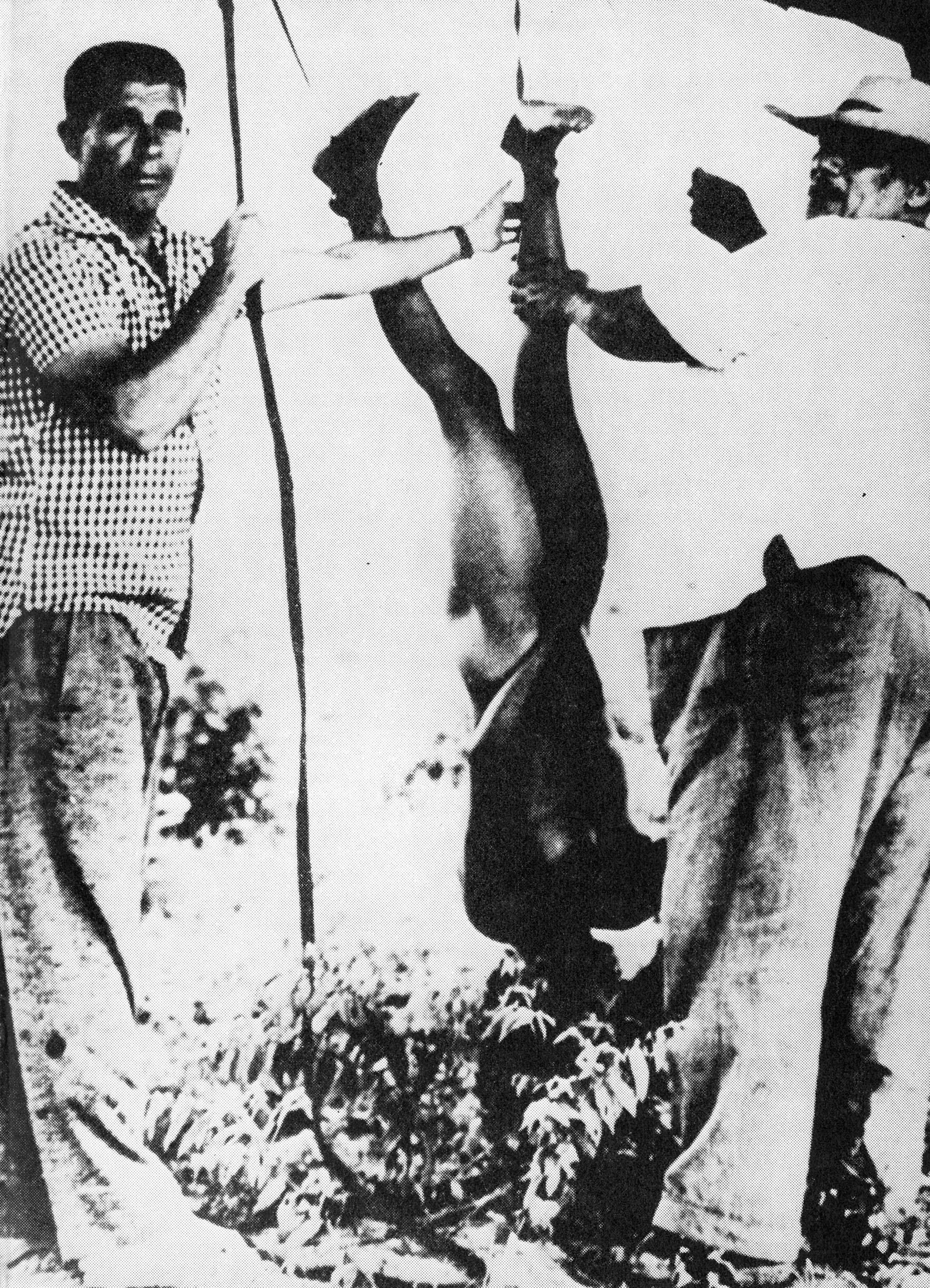
Atrocities against the Cinta Larga tribe were exposed in the Figueiredo report. After shooting the head off her baby, the killers cut the mother in half. Atrocities against the Cinta Larga tribe were exposed in the Figueiredo report. After shooting the head off her baby, the killers cut the mother in half.
Download hi-res image

Credit: © Survival
 
IGPA archive">A Karajá couple with their baby, who has died of flu.A Karajá couple with their baby, who has died of flu.
Download hi-res image

Credit: © Jesco von Puttkamer/ IGPA archive

Source: Survival International

Researchers Discover That The Tulasi Plant Can Be Used To Remove Fluoride From Drinking Water


An exciting and new water treatment breakthrough has been announced that will now make the removal of fluoride from the drinking water supplies of the world’s poorest people more affordable than ever.

Researchers from Rajasthan University in India have discovered that the Tulasi plant, also known as Holy Basil, can be used to significantly reduce the amount of fluoride in drinking water.

At present, the most reliable methods used to remove excessive fluoride from drinking water are either too expensive or not suitable for the environments where they are needed most.

The method discovered by researchers from Rajasthan University is safe, cheap and readily available, making it an ideal alternative for communities who can’t afford to use the more advanced techniques of removing fluoride that are readily available in the West.

An experiment was conducted in the Yellareddyguda village of Narketpally Mandal. The researchers soaked 75mg of Tulasi leaves in 100ml of water that contained 7.4 parts per million of fluoride in the water.

After only soaking the Tulasi leaves for eight hours, it was discovered that the level of fluoride in the water was reduced from 7.4 parts per million, to only 1.1 parts per million.

At present, the World Health Organization recommends that the safe level of fluoride in drinking water is between 0.5 to 1 parts per million.

The dangers of drinking water that contains high levels of fluoride are well known. Some of the known side effects of drinking water that contains fluoride are dental fluorosis, reduced intelligence in children and a damaged nervous system.

This new water treatment option could now provide the world’s poorest people an opportunity to remove excessive fluoride from their drinking water supplies.

However, more research is still needed to identify and validate the effectiveness of using Tulasi leaves as a means of removing fluoride from drinking water supplies.

Considering the cost-prohibitive nature of other more reliable water treatment techniques, if the Tulasi plant is conclusively proven to be effective in removing fluoride from drinking water, then we may witness a revolution in water treatment, providing options to areas where none currently exist.

Source: Activist Post

5 Million Farmers Sue Monsanto for $7.7 Billion

Launching a lawsuit against the very company that is responsible for a farmer suicide every 30 minutes, 5 million farmers are now suing Monsanto for as much as 6.2 billion euros (around 7.7 billion US dollars). The reason? As with many other cases, such as the ones that led certain farming regions to be known as the ‘suicide belt’, Monsanto has been reportedly taxing the farmers to financial shambles with ridiculous royalty charges. The farmers state that Monsanto has been unfairly gathering exorbitant profits each year on a global scale from “renewal” seed harvests, which are crops planted using seed from the previous year’s harvest.

The practice of using renewal seeds dates back to ancient times, but Monsanto seeks to collect massive royalties and put an end to the practice. Why? Because Monsanto owns the very patent to the genetically modified seed, and is charging the farmers not only for the original crops, but the later harvests as well. Eventually, the royalties compound and many farmers begin to struggle with even keeping their farm afloat. It is for this reason that India slammed Monsanto with groundbreaking ‘biopiracy’ charges in an effort to stop Monsanto from ‘patenting life’.

Jane Berwanger, a lawyer for the farmers who went on record regarding the case, told the Associted Press:

“Monsanto gets paid when it sell the seeds. The law gives producers the right to multiply the seeds they buy and nowhere in the world is there a requirement to pay (again). Producers are in effect paying a private tax on production.”

The findings echo what thousands of farmers have experienced in particularly poor nations, where many of the farmers are unable to stand up to Monsanto. Back in 2008, the Daily Mail covered what is known as the ‘GM Genocide’, which is responsible for taking the lives of over 17,683 Indian farmers in 2009 alone. After finding that their harvests were failing and they started to enter economic turmoil, the farmers began ending their own lives — oftentimes drinking the very same insecticide that Monsanto provided them with.

As the information continues to surface on Monsanto’s crimes, further lawsuits will begin to take effect. After it was ousted in January that Monsanto was running illegal ‘slave-like’ working rings, more individuals became aware of just how seriously Monsanto seems to disregard their workers — so why would they care for the health of their consumers? In April, another group of farmers sued Monsanto for ‘knowingly poisoning’ workers and causing ‘devastating birth defects’.

Will endless lawsuits from millions of seriously affected individuals be the end of Monsanto?

Source: Natural Society

Wednesday, April 24, 2013

Samsung Demos a Tablet Controlled by Your Brain

An easy-to-use EEG cap could expand the number of ways to interact with your mobile devices.

One day, we may be able to check e-mail or call a friend without ever touching a screen or even speaking to a disembodied helper. Samsung is researching how to bring mind control to its mobile devices with the hope of developing ways for people with mobility impairments to connect to the world. The ultimate goal of the project, say researchers in the company’s Emerging Technology Lab, is to broaden the ways in which all people can interact with devices.

In collaboration with Roozbeh Jafari, an assistant professor of electrical engineering at the University of Texas, Dallas, Samsung researchers are testing how people can use their thoughts to launch an application, select a contact, select a song from a playlist, or power up or down a Samsung Galaxy Note 10.1. While Samsung has no immediate plans to offer a brain-controlled phone, the early-stage research, which involves a cap studded with EEG-monitoring electrodes, shows how a brain-computer interface could help people with mobility issues complete tasks that would otherwise be impossible.

Brain-computer interfaces that monitor brainwaves through EEG have already made their way to the market. NeuroSky’s headset uses EEG readings as well as electromyography to pick up signals about a person’s level of concentration to control toys and games (see “Next-Generation Toys Read Brain Waves, May Help Kids Focus”). Emotiv Systems sells a headset that reads EEG and facial expression to enhance the experience of gaming (see “Mind-Reading Game Controller”).

To use EEG-detected brain signals to control a smartphone, the Samsung and UT Dallas researchers monitored well-known brain activity patterns that occur when people are shown repetitive visual patterns. In their demonstration, the researchers found that people could launch an application and make selections within it by concentrating on an icon that was blinking at a distinctive frequency.

Robert Jacob, a human-computer interaction researcher at Tufts University, says the project fits into a broader effort by researchers to find more ways for communicating with small devices like smartphones. “This is one of the ways to expand the type of input you can have and still stick the phone in the pocket,” he says.

Finding new ways to interact with mobile devices has driven the project, says Insoo Kim, Samsung’s lead researcher. “Several years ago, a small keypad was the only input modality to control the phone, but nowadays the user can use voice, touch, gesture, and eye movement to control and interact with mobile devices,” says Kim. “Adding more input modalities will provide us with more convenient and richer ways of interacting with mobile devices.”

Still, it will take considerable research for a brain-computer interface to become a new way of interacting with smartphones, says Kim. The initial focus for the team was to develop signal processing methods that could extract the right information to control a device from weak and noisy EEG signals, and to get those methods to work on a mobile device.

Jafari’s research is addressing another challenge—developing more convenient EEG sensors. Classic EEG systems have gel or wet contact electrodes, which means a bit of liquid material has to come between a person’s scalp and the sensor. “Depending on how many electrodes you have, this can take up to 45 minutes to set up, and the system is uncomfortable,” says Jafari. His sensors, however, do not require a liquid bridge and take about 10 seconds to set up, he says. But they still require the user to wear a cap covered with wires.

The concept of a dry EEG is not new, and it can carry the drawback of lower signal quality, but Jafari says his group is improving the system’s processing of brain signals. Ultimately, if reliable EEG contacts were convenient to use and slimmed down, a brain-controlled device could look like “a cap that people wear all day long,” says Jafari.

Kim says the speed with which a user of the EEG-control system can control the tablet depends on the user. In the team’s limited experiments, users could, on average, make a selection once every five seconds with an accuracy ranging from 80 to 95 percent.

“It is nearly impossible to accurately predict what the future might bring,” says Kim, “but given the broad support for initiatives such as the U.S. BRAIN initiative, improvements in man-machine interfaces seem inevitable” (see “Interview with BRAIN Project Pioneer: Miyoung Chun”).

Source: Technology Review

Monsanto vs. Mother Earth: Join the millions who have already signed the petition to take back nature from the biotech monsters


The world's most evil corporation, Monsanto, has taken a new interest in conventional food crops, which the company is currently trying to seize ownership of in Europe by exploiting a little-known loophole in European patent law. And a petition created by the human rights group Avaaz, which has already garnered nearly two million signatures in less than two weeks, may help stop this unscrupulous takeover of food by drawing global attention to it.

According to Avaaz, European patent law is currently written in such a way as to allow corporations the option to literally patent natural plant varieties and conventional plant breeding methods, even if they have been utilized by farmers and gardeners for centuries. As a result, Monsanto and others are beginning to file for these patents, which could allow them to eventually require farmers to pay royalties and buy seed every year for non-GMO, natural crops.

"Companies like Monsanto have found loopholes in European law to have exclusive rights over conventional seeds," explains the Avaaz petition. "Many farmers and politicians are already against this -- we just need to bring in people power to pressure these countries to keep Monsanto's hands off our food."

You can view and sign the Avaaz petition here:
http://www.avaaz.org/en/monsanto_vs_mother_earth_loc/?tPQJleb

Coordinated effort required to stop Monsanto takeover of food supply

Avaaz is calling on powerful European nations like Germany, France and the Netherlands to take action now to stop this corporate takeover of the seeds of life. Since grassroots awareness of Monsanto's seed-seizing tactics is already strong in each of these countries, it would be prudent for them to collectively strike back against this affront to food freedom by voting to eliminate the patent law loopholes that could allow the biotech bullies to assume ownership of nature.

"As concerned citizens, we urge you to take the lead to fix European patent law by calling on the Administrative Council of the European Patent Organization to close the loopholes that allow corporations to patent plant varieties and conventional breeding methods," states the petition, as directed specifically to the governments of France, Germany and the Netherlands, all of which are member states of the European Patent Convention.

"Clear and effective safeguards and prohibitions are needed to protect consumers, farmers and breeders from the corporate takeover of our food chain."

You can view and sign the Avaaz petition here:
http://www.avaaz.org/en/monsanto_vs_mother_earth_loc/?tPQJleb

According to Avaaz, the petition went viral quickly after being established on April 9, 2013, achieving one million signatures in less than two days. And you can help keep the momentum strong by not only signing the petition yourself, but sharing it with your friends and family.

You can also participate in the official March Against Monsanto, a global grassroots effort to expose the truth about the dangers of GMOs; question the duplicitous complacency of governments with regards to the GMO issue; and advocate for a global boycott of Monsanto-owned companies. You can learn more about March Against Monsanto by visiting the group's Facebook page:
https://www.facebook.com/events/147274678766425/

Source: Natural News

Massive, uncontained leak at Fukushima is pouring over 710 billion becquerels of radioactive materials into atmosphere


The tsunami-caused nuclear accident at the Fukushima power station in Japan is the disaster that never ends, as new reports indicate that a wealth of new radioactive materials have been spewed into the atmosphere.

According to Singapore-based news outlet AsiaOne, the Tokyo Electric Power Co., which owns the multi-nuclear reactor power station at Fukushima, announced April 6 that some 120 tons of water that had been contaminated with radioactive substances had leaked from an underground storage facility at the No. 1 atomic power plant site.

Running out of storage room?

TEPCO officials announced the leak late in the day April 5, a Friday, "but said measures to address the problem had not been taken for two days because the cause had not been identified," AsiaOne reported. The company "assumed the water was still leaking."

According to company officials TEPCO estimates that the leaked water contains about 710 billion becquerels of radioactive substances, making it the largest leak of radioactive materials ever at the plant. Discovery of the leak led the company to transfer about 13,000 tons of polluted, radioactive water in the questionable storage area to a neighboring underground storage unit.

That storage unit, TEPCO said, is 60 meters long, 53 meters wide and six meters deep. It is pool-like in structure and has a three-layer waterproof sheet with a concrete cover.

According to the company, water that has leaked from damaged nuclear reactors is run through filters and additional devices in order to remove radioactive elements. The water is then stored in facilities for low-level contaminated water.

TEPCO began using the storage facility Feb. 1. As of April 5, 13,000 tons of radioactive water was being stored there - very close to the 14,000-ton limit.

More leaking contamination

AsiaOne reported that water samples taken by TEPCO from soil surrounding the damaged facility a few days later showed 35 becquerels per cubic centimeter of radioactive substances, which is abnormal. "Safe" levels of becquerels is 300 per kilogram of water, according to New Scientist.

However, TEPCO officials did not publicly announce their findings right away after not finding any other unusual changes in water quality data, such as chloride concentration.

On April 5, the report said, two days after the problem was first noticed, water with 6,000 becquerels per cubic centimeter of radioactive substances was located between the first and second layers of the waterproof sheet, which alerted TEPCO engineers and plant officials that a leak had occurred.

Per AsiaOne:

As the sheet's layers were joined when the facility was constructed, TEPCO assumed that the sheet may have been damaged, or that a mistake had been made during construction. An average of about 400 tons a day of groundwater seeped into buildings housing nuclear reactors and turbines, increasing the quantity of polluted water.

The latest problem will create a storage shortage; TEPCO officials said storage of polluted water at the facility will be reduced from 53,000 tons to 40,000 - a significant reduction. That will make it necessary for the power company to go over procedures for handling polluted water, which will include increasing the number of storage units.

The disaster that keeps on giving

TEPCO said earlier this month it expected the water transfer would take about five days to complete.

"As the height of the water storage facility is relatively low, we think it's unlikely that the polluted water mixed into underground water and reached the sea 800 meters away," said Masayuki Ono, the acting chief of TEPCO's nuclear facilities department, at a press conference April 6.

The plant was damaged by a huge earthquake-caused tsunami March 11, 2011. At the time of the incident, three of the plant's atomic reactors were shut down: No. 4 had been de-fueled and Nos. 5 and 6 were in cold shut-down for maintenance.

The remaining three automatically shut down at the time of the accident and emergency generators came on to keep coolant systems operating.

Source: Natural News

Biotech's latest creation: Franken-apples coming to a store near you


We hate to upset the biotech apple cart, but a pesticide-intensive GMO apple, produced through a possibly risky manipulation of RNA, doesn't deserve a place on our grocery shelves.

Thanks to the biotech industry's relentless quest to control our food, McDonald's, Burger King and even school cafeterias will soon be able to serve up apples that won't turn brown when they're sliced or bitten into. A new, almost entirely untested genetic modification technology, called RNA interference, or double strand RNA (dsRNA), is responsible for this new food miracle. Scientists warn that this genetic manipulation poses health risks, as the manipulated RNA gets into our digestive systems and bloodstreams. The biotech industry claims otherwise.

Of course, like any non-organic apple, the new GMO Arctic® Apple will be drenched in toxic pesticide residues, untested by the U.S. Food & Drug Association (FDA) and likely unlabeled. And of course these shiny new high-tech apples will be cheap, priced considerably lower than a pesticide-free, nutrient-dense, old-fashioned organic apple that turns a little brown after you slice it up.

When the Biotech Industry Organization gathers next week in Chicago for the 2013 BIO International Convention, BIOTECanada will present its "Gold Leaf Award for Early Stage Agriculture" to Okanagan Specialty Fruits, Inc. (OSF), purveyor of the Arctic® Apple, slated for approval in the U.S. this year. We hate to upset the biotech apple cart, but a pesticide-intensive GMO apple, produced through a risky manipulation of RNA, doesn't deserve a place on our grocery shelves, much less in the agriculture hall of fame.

That said, the Arctic "Frankenapple" is expected to be approved this year by the U.S. Department of Agriculture (USDA), responsible for protecting agriculture from pests and diseases. It does not require approval by the FDA, which is responsible for human food and animal feed.

Just one more bad apple

Apples, that is, apples that haven't been certified organic, already are on the list of Should-Be-Forbidden fruits. They reliably top the Environmental Working Group's Dirty Dozen list, for both the volume and the stunning array of pesticides consistently found on them. According to the Pesticide Action Network's analysis of the most recent USDA data, apples tested positive for 42 pesticides, including organophosphate and pyrethroid pesticides. Both are endocrine disruptors, both have suspected neurological effects, and both are considered especially toxic for children. (Organophosphates are the basis for nerve gases used in chemical warfare, and have been linked to the development of ADHD in kids.)

Given the grim report card of non-organic apples, some might say it really doesn't make any difference if we start tinkering with the apple's genetic RNA. After all, unlike the case with GMO corn or salmon, scientists aren't injecting pesticides or genes from foreign plants or animals into the genes of apples to create the Frankenapple. While most existing genetically engineered plants are designed to make new proteins, the Arctic Apple is engineered to produce a form of genetic information called double-stranded RNA (dsRNA). The new dsRNA alters the way genes are expressed. The result, in the Arctic Apple's case, is a new double strand of RNA that genetically "silences" the apple's ability to produce polyphenol oxidase, an enzyme that causes the apple to turn brown when it's exposed to oxygen.

Harmless? The biotech industry, OSF and some scientists say yes. But others, including Professor Jack Heinemann (University of Canterbury, New Zealand), Sarah Agapito-Tenfen (from Santa Catarina University in Brazil) and Judy Carman (Flinders University in South Australia), say that dsRNA manipulation is untested, and therefore inherently risky. Recent research has shown that dsRNAs can transfer from plants to humans and other animals through food. The biotech industry has always claimed that genetically engineered DNA or RNA is destroyed by human digestion, eliminating the danger of these mutant organisms damaging human genes or human health. But many biotech scientists says otherwise. They point to evidence that the manipulated RNA finds its way into our digestive systems and bloodstreams, potentially damaging or silencing vital human genes.

There are indirect health consequences, too. Turns out the chemical compound that is shut off in the engineered fruit through RNA manipulation, in order to make it not oxidize or brown, is a chemical compound that also fights off plant pests. What happens when the apple's ability to fend off insects is compromised? Growers will need to spray greater amounts, of possibly even more toxic pesticides, on a crop already saturated with at least 42 types of pesticides. Those pesticides will eventually find their way into our bodies, either because we ingested the fruit, or breathed the air or drank the water where the pesticides were sprayed.

Testing? What testing?

So what's the trade-off? Non-organic apple growers will prosper as more moms buy more apples for more kids who will, the industry alleges, be the healthier for it. It makes for a good public relations story, but no matter how you wrap it up or slice it, taking apples that are already saturated in pesticides, and genetically engineering them for purely cosmetic purposes, does not a healthy snack make.

The pro- and anti-GMO movements will debate whether or not the GMO apple is safe for human consumption. The fact is, we'll never know until they are properly labeled and safety-tested. As with every other GMO food ingredient or product sold in the U.S., the Arctic Apple will undergo no independent safety testing by the FDA or the USDA. Instead, the USDA will rely on OSF's word that the apple is safe for human consumption. And without any state or federal mandatory GMO labeling laws in place, OSF will not be required to label its Frankenapple, meaning that consumers or children harmed by the dsRNA modified apple will have great difficulty identifying the mutant RNA that harmed them.

The controversy and debate surrounding dsRNA and the Arctic Apple has just begun. But there is no longer any debate about the dangers that pesticides and pesticide residues on non-organic apples pose to humans, whether we directly ingest these toxic residues by eating an apple, or whether we're exposed to them through contaminated air and groundwater as a result of acres of orchards being sprayed to control increasingly resistant insects and diseases.

What about the argument that a kid eating a few slices of apples can't consume enough of any one of these pesticides to cause any real risk to their health? Debunked. Recent studies reveal that during apple season, kids exhibit spikes in the level of pesticides found in their urine, spikes that exceed the U.S. government's "safe levels." Kids who live in apple-growing regions show even higher spikes. And those 42 varieties of pesticides? The government establishes "safe levels" for each one - but it doesn't test for the potential effect of ingesting 42 different pesticides, all chemically interacting with each other, and ingested all at once.

From biodiversity to monoculture

How did we get to the point where it takes 42 pesticides to keep an apple crop healthy? Michael Pollan best explains it in his book Botany of Desire. Turns out that apples have an extreme tendency toward something called heterozygosity, which means genetic variability. This trait accounts for how, left to its own devices, the apple can "make itself at home in places as different from one another as New England and New Zealand, Kazakhstan and California." Pollan writes:
"Wherever the apple tree goes, its offspring propose so many different variations on what it means to be an apple - at least five per apple, several thousand per tree - that a couple of these novelties are almost bound to have whatever qualities it takes to prosper in the tree's adopted home."
Today, you'd have to visit the apple orchard museum in Geneva, New York, to find all the varieties of apples that used to thrive in the wild. Over time, in our quest to control the taste, texture and appearance of apples, we've eliminated all but a relative few varieties. We've gone too far, says Pollan. By relying on too few genes for too long, the apple has lost its ability to get along on its own, outdoors.

Enter the agro-chemical companies. According to the National Agricultural Statistics Service (NASS) Agricultural Chemical Use Program, apple growers in states surveyed in 2011 applied carbaryl to 46 percent of their acreage, at an average rate of 1.566 pounds per acre for the crop year; chlorantraniliprole to 45 percent; and chlorpyrifos to 44 percent. Apple growers applied glyphosate isopropylamine salt to 25 percent of acres at an average of 1.604 pounds per acre for the crop year. And that's just the tip of the iceberg.

The Arctic Apple has been in development for over a decade, the company says. OSF submitted a petition for deregulation to the USDA in May 2010. The USDA, which must hold two public comment periods, concluded the first on Sept. 11, 2011. It's expected to open the second public comment period this spring or summer, and OSF hopes the GMO apple will be approved for growing and selling in the U.S. this year.

The Organic Consumers Association will hold a press conference and set up a picket line at the Biotechnology Industry Organization Convention in Chicago, at noon on April 23, to protest OSF's GMO apple.