Saturday, June 9, 2012


Friday, June 8, 2012
Moscow bans gay pride for century ahead

Moscow city court has upheld a decision to turn down the LGBT activists’ request for permission to hold gay pride parades for the next 100 years.
Earlier, Tverskoy district court ruled lawful the decision of the Moscow municipal government to ban public events that can be qualified as gay parades from March 2012 till May 2112.
Nikolay Alekseyev, one of the leaders of the Russian LGBT community and organizer of gay pride events, told reporters that he intended to appeal the decision in the Moscow City Court Presidium, and that if the highest Russian instance also rules against him, to address the European Court of Human Rights.
Alekseyev explained to the reporters that in 2011, the activists found a loophole in Russian legislation and submitted requests for 102 gay pride parades to the Moscow Mayor’s office. According to the activist, all they got in return was a letter with a quote from regulations, although the law obliges the city authorities to either allow or ban the planned event within 15 days.
At the same time, Alekseyev admitted that he and his comrades never hoped to actually receive a license for the parade but simply needed a formal excuse to turn to the European Human Rights Court.
“They refuse our requests every time, but in Strasbourg they recognize these rulings as unlawful. But time does not stand still, we ask for a new event and again they refuse us,” the activist noted.
On one occasion, though, Muscovite gay rights activists found a way to the streets – after they quibbled the authorities to get access. About 70 people marched on one of Moscow’s quays under rainbow banners in early June and managed to hold a two-hour rally calling for freedom of assembly and organization for sexual minorities.
The rally was not officially announced as a gay pride event, as the organizers initially applied for a permit to hold “a rally against all types of discrimination.”
This year the Russian government started an active campaign against so-called gay propaganda – a special law was approved and signed into force in St. Petersburg, prompting a group of parliamentarians to suggest approving a similar law on a nationwide scale. Two people have already been brought to justice in St. Petersburg for displaying a poster reading “Being gay is normal” in the street near a kindergarten.
The bill has been widely criticized by Russia's LGBT and human rights activists as well as international human rights groups. Protest rallies by Russian consulates took place in many countries throughout the world.
After the first reading of the legislation Amnesty International urged St. Petersburg’s lawmakers to stop the adoption of the “inhumane” bill. The US State Department has also criticized the document.
Many legal experts have declared that the legislation is so vague that it is impossible to distinguish where one’s private life ends and propaganda begins, so anyone can be brought to trial for breaking the law.
American show business legend Madonna revealed herself as an outspoken critic of the controversial bill. On her Facebook page the singer announced that during her concert scheduled for this summer in St. Petersburg she will “speak up for the gay community, to support the gay community and to give strength and inspiration to anyone who is or feels oppressed.”
First American Arrested by Aid of Drone Argues 4th Amendment Violation
It’s been about a year since a North Dakota man was arrested after a local SWAT team tracked him down using a Predator drone it borrowed from the Department of Homeland Security.
Although the story has not been widely reported, Rodney Brossart became one of the first American citizens (if not the first) arrested by local law enforcement with the use of a federally owned drone aerial surveillance vehicle after holding the police at bay for over 16 hours.
Brossart’s run-in with law enforcement began after six cows found their way onto his property (about 3,000 acres near Lakota, North Dakota) and he refused to turn them over to officers. In fact, according to several sources, Brossart and a few family members ran police off his farm at the point of a gun.
Naturally, police weren’t pleased with Brossart’s brand of hospitality, so they held returned with a warrant, with a SWAT team, and with a determination to apprehend Brossart and the cows.
A standoff ensued and the Grand Forks police SWAT team made a call to a local Air Force base where they knew a Predator drone was deployed by the DHS. About three years before the Brossart incident, the police department had signed an agreement with DHS for the use of the drone.
No sooner did the call come in than the drone was airborne and Brossart’s precise location was pinpointed with laser-guided accuracy. The machine-gun toting SWAT officers rushed in, tased then arrested Brossart on various charges including terrorizing a sheriff, and the rest is history. Literally.
As the matter proceeds through the legal system, Bruce Quick, the lawyer representing Brossart, is decrying the “guerilla-like police tactics” used to track and capture his client, as well as the alleged violation of the Fourth Amendment’s protection against unwarranted searches and seizures.
While the police admittedly possessed an apparently valid search warrant, Quick asserts that no such judicial go-ahead was sought or obtained for the use of the Predator to track the suspect. Therein lies the constitutional rub.
In an interview with the press, Quick claims that the police exceeded their authority in several instances, especially when they decided to go around the Fourth Amendment and illegally search Brossart’s farm.
"The whole thing is full of constitutional violations," he says.
Quick goes so far as to call the police’s use of the taser "tortuous" and something only slightly below "water-boarding."
For its part, the legal team representing Grand Forks insists that such extraordinary measures were necessary in light of Brossart’s armed resistance of arrest and his family’s wielding of “high-powered rifles” in his defense.
Furthermore, the drone was deployed only as a last ditch effort to peacefully end the nearly daylong deadlock, the state avers.
"Unmanned surveillance aircraft were not in use prior to or at the time Rodney Brossart is alleged to have committed the crimes with which he is charged," wrote state prosecutor Douglas Manbeck, as quoted by U.S. News.
As for the SWAT team's handling of the high-powered remote control surveillance aircraft, a spokesman for the unit told U.S. News that his men have "received training on the basic capabilities of the Predator" and that they follow very clear-cut guidelines for "when [they] can or cannot use a drone."
Manbeck defends the deployment of the drone, writing that "The use of unmanned surveillance aircraft is a non-issue in this case because they were not used in any investigative manner to determine if a crime had been committed. There is, furthermore, no existing case law that bars their use in investigating crimes."
Maybe, maybe not. This and other issues will be laid before the court when Brossart’s trial begins later this month.
Is there a legal distinction to be made between the level of search conducted by the human eye (whether the searcher is on foot or in a helicopter) and that of a drone’s powerful never-blinking optics? Such an inarguable increase in police perception is not an insignificant decrease in the privacy expectation enjoyed by landowners and protected for centuries by timeless principles of Anglo-American law.
Given this encroachment into the formerly sacrosanct territory of individual liberty, Americans are right to resist the government’s apparent plan to fill the skies of our Republic with remote-controlled agents of the President and police.
In point of fact, a warrant becomes unnecessary when the search is being conducted using a drone. The target of the hunt will likely be unaware that he is being tracked and thus government (at any level) can keep a close eye on those considered threats to national (or local) security without having to permit the eye of the court to look over their shoulder.
Quick seems to appreciate the danger posed by the proliferation of drones. "We're starting to see drones used more and more, but were they intended to be used by civilian law enforcement?" he told an interviewer. "That smacks of big brother to me. I think we need to think long and hard before we proceed down this path."
Not surprisingly, there are those who claim that a sheriff’s use of a Predator is no different from his use of a helicopter, and that those who warn of an impending surveillance state are alarmists who should be paid no mind.
However, as discussed above, there are irrefutable differences in technology between the two vehicles, not to mention the devices used by each to perform their assigned tasks.
Beyond these distinctions there is another more sinister drone quality that sets it apart from its more traditional airborne ancestor. Glenn Greenwald accurately assessed the threat in a recent piece published by Salon:
For those dismissing concerns about drones by claiming (falsely) that they are the equivalent of police helicopters, won’t those same people dismiss concerns over weaponized drones by arguing: there’s no difference between allowing the police to Taser you or shoot you themselves and allowing them to do that by drone? This is always how creeping police state powers are entrenched: one step at a time.
Still doubt such devious intent on the part of law enforcement? Witness the story of the Houston Police Department’s glee over their recent purchase of a drone. The Houston Chronicle reports:
Chief Deputy Randy McDaniel of the sheriff's office said the $300,000 ShadowHawk drone — purchased from Vanguard Defense Industries with federal homeland security grant funds — will take to the air in the coming months to provide another tool in the law enforcement arsenal.
"It's an exciting piece of equipment for us," he said. "We envision a lot of its uses primarily in the realm of public safety — looking at recovery of lost individuals and being able to utilize it for fire issues."
In the future, the drone could be equipped to carry nonlethal weapons such as Tasers or a bean-bag gun, McDaniel said.
Taser and bean-bag guns today, Hellfire missiles and machine guns tomorrow.
Still don’t believe the warning? Read what one commentator wrote (with obvious pride) about a similar small drone — the Switchblade:
“…it is an ingenious, miniature unmanned aerial vehicle (UAV) that is also a weapon.”
Do the research: Drones are cheaper than helicopters, they are more agile, they are more accurate, they are quieter, they are smaller — all of which makes them exponentially deadlier. Drones are indeed the quieter, quicker killer and they will be used to the best of those abilities.
Thursday, June 7, 2012
Wednesday, June 6, 2012
Sean Parker launches video social network
Airtime acts in a similar way to free video chat phenomenon Chatroulette, but allows users to connect with their Facebook friends as well as strangers based on shared interests and location proximity. The site also allows users to share content such as YouTube videos, with more options such as games coming soon
Unlike Chatroulette, Airtime says it has built automatic “abuse prevention” filters into the service to prevent vulgar content from appearing on the site.
The team behind Airtime, which also includes Parker’s fellow Napster co-founder Shawn Fanning, plan to monetise the service by selling advertising or virtual goods once it has built up its user base.
Speaking at Airtime’s launch event, which was attended by celebrities including Snoop Dogg, Alicia Keys and Jim Carrey, Parker said Airtime was built in an attempt to move the internet’s social graph into an “interest graph”.
He added: “Facebook isn’t helping you make new connections, Facebook doesn’t develop new relationships, Facebook is just trying to be the most accurate model of your social graph. There’s part of me that feels somewhat bored by all of this. There’s no room for serendipity.
Airtime has already reportedly raised $33m (£21m) in funding and employs about 30 people in its San Francisco base. Parker still retains a circa $2.65bn (£1.7bn) stake in Facebook.
Google Warns Users They May Become Collateral Damage in Cyber War
Google announced on Tuesday it will begin displaying a warning to users who the internet giant believe are under state-sponsored malware attack.
“We are constantly on the lookout for malicious activity on our systems, in particular attempts by third parties to log into users’ accounts unauthorized. When we have specific intelligence – either directly from users or from our own monitoring efforts – we show clear warning signs and put in place extra roadblocks to thwart these bad actors,” Eric Grosse, VP of Security Engineering, said in a statement posted on Google’s security blog.
Google has not revealed what criteria or technology will be used to detect the attacks.
The move comes following high-profile attacks on Google. More than two years ago western corporations claimed they were attacked by Chinese hackers. In 2001, the U.S. government said senior officials with Gmail accounts were targeted. In response, Google moved servers from mainland China to Hong Kong.
Russian activists opposed to the re-installment of the Putin regime also claim their Google accounts were targeted. Russia’s FSB, heir to the old Soviet KGB, have repeatedly called for a crackdown on the internet and other “new technologies” it believes are being used by western intelligence agencies to “create and maintain constant tension in societies.”
Earlier this year, a “self-professed” Iranian hacker group claimed they had compromised the accounts of thousands of NASA researchers. The attack came after the U.S. and Israel attacked Iranian computer networks with the Stuxnet virus. It was reported last week that the Obama administration authorized an ambitious cyber attack on Iran as part of its ongoing effort to destabilize the country and derail its fledgling nuclear program.
It is unclear if Google will also protect its networks against attacks waged by the Pentagon. DARPA, the Pentagon’s Defense Advanced Research Projects Agency, has launched its Plan X, an effort to recruit “the private sector, universities and even computer-game companies as part of an ambitious effort to develop technologies to improve its cyberwarfare capabilities, launch effective attacks and withstand the likely retaliation,” according to the Washington Post.
Finally, it should be noted that Google is a prime target for a number of reasons, most notably for the role it plays as a key intelligence asset to both the CIA and the NSA. It has supplied the core search technology for Intellipedia, a highly-secured online CIA system and has shared a close relationship with the CIA, NSA, and government national security officials.
“Google’s connection with the CIA and its venture capital firm extends to sharing at least one key member of personnel. In 2004, the Director of Technology Assessment at In-Q-Tel, Rob Painter, moved from his old job directly serving the CIA to become ‘Senior Federal Manager’ at Google.,” writes Eric Sommer.
In-Q-Tel, a venture capital firm established by the CIA, also had a hand in creating the wildly popular social network Facebook. “The second round of funding into Facebook ($US12.7 million) came from venture capital firm Accel Partners. Its manager James Breyer was formerly chairman of the National Venture Capital Association, and served on the board with Gilman Louie, CEO of In-Q-Tel,” writes Matt Greenop.
Considering the Obama administration’s open effort to sabotage Iran – and more than likely other official enemies, including Syria, Russia and China – retaliatory cyber attacks should be expected.
Google is now warning hapless users that they may become victims – or collateral damage – of these retaliatory attacks.
Leaked Bilderberg Documents: “Nationalism Is Dangerous”
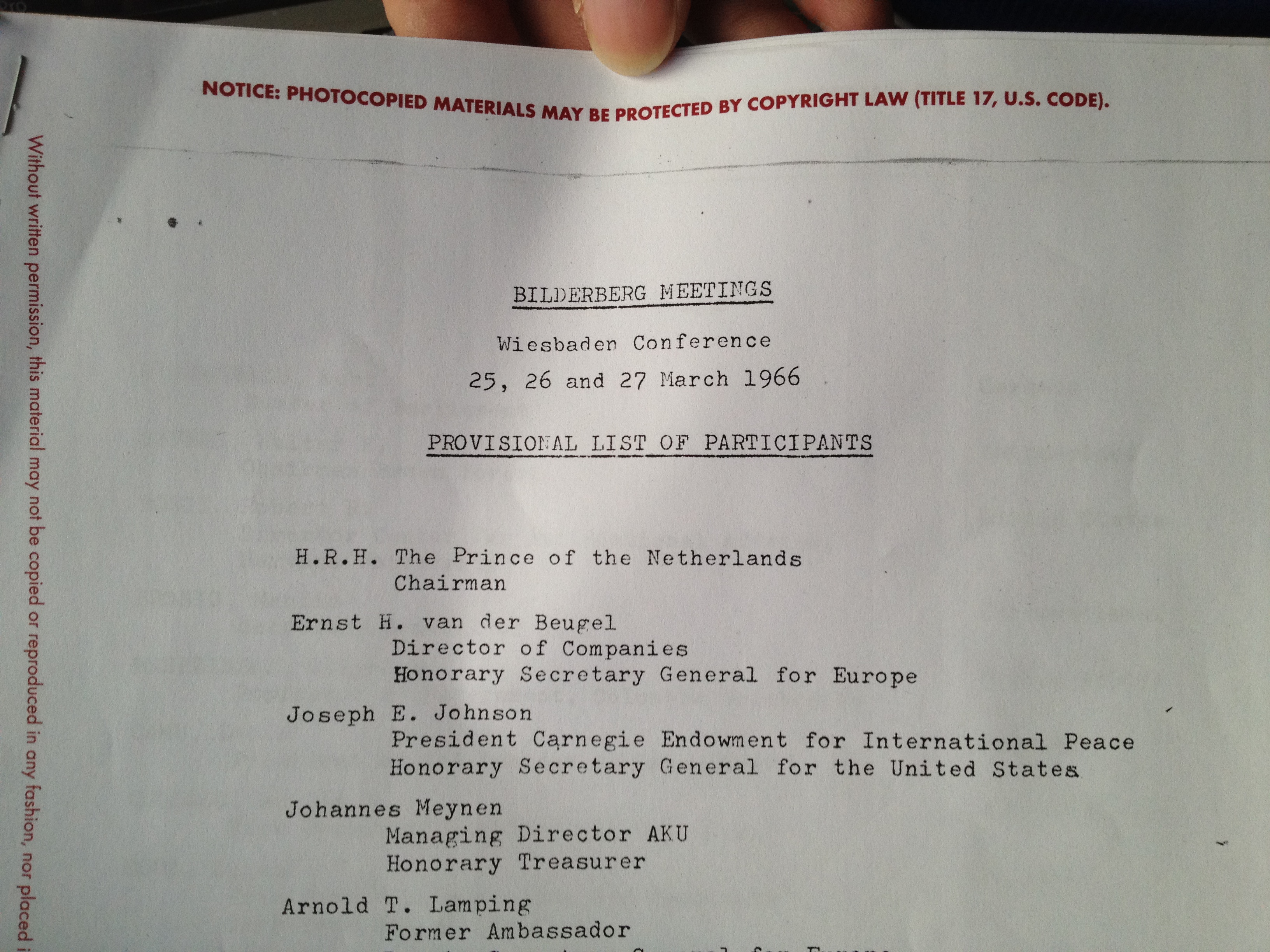
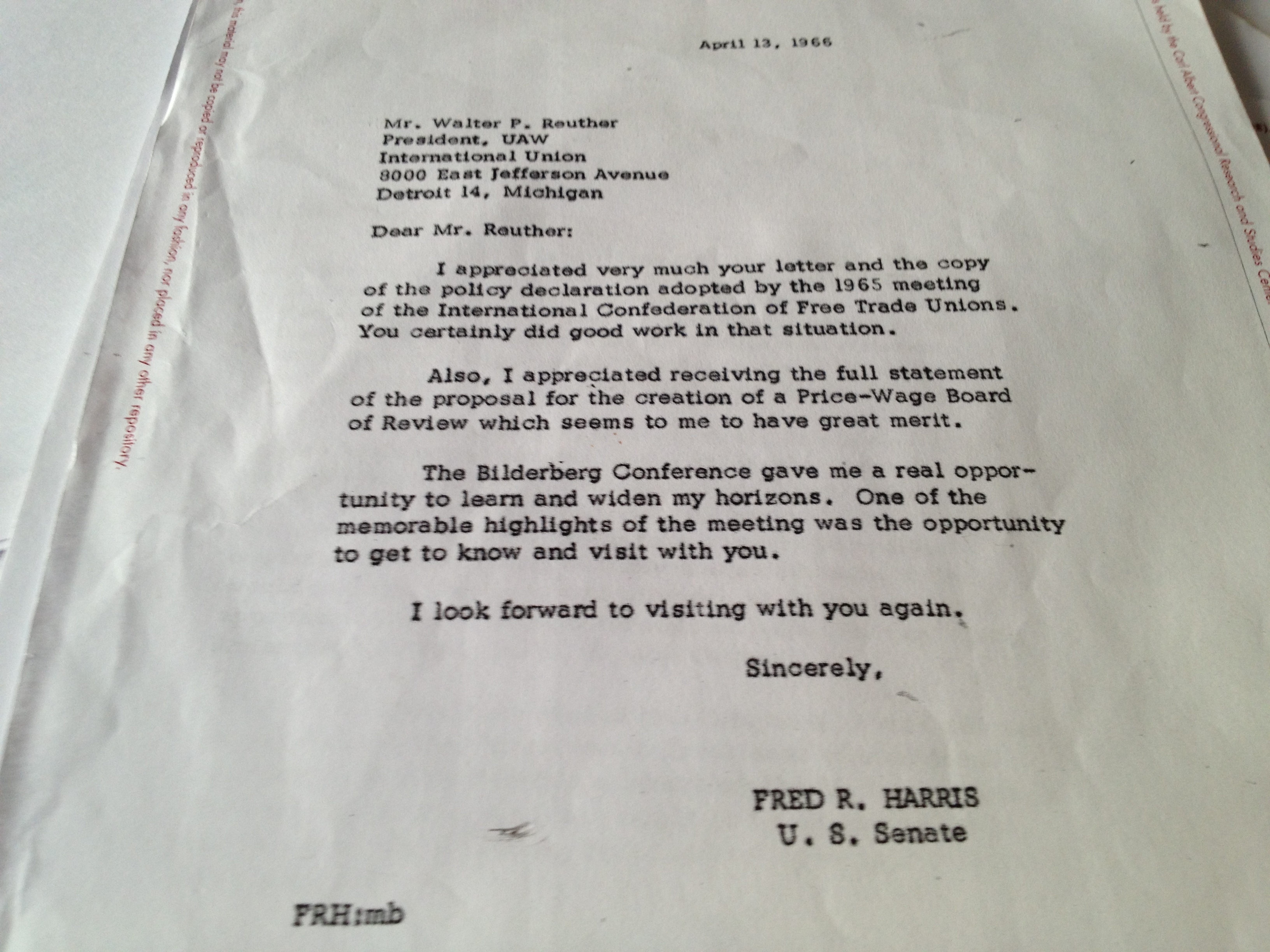
Leaked documents from the 1966 Bilderberg Group conference exclusively obtained by Infowars betray how even as far back as five decades ago U.S. Senators were being indoctrinated with the belief that “nationalism is dangerous” by Bilderberg elitists, in addition to top union heads scheming behind their members’ backs with titans of capitalism and industry.

Previously leaked documents from meetings have illustrated how the Bilderberg Group, contrary to the media-generated myth that the confab represents a harmless talking shop, sets the consensus for policy decisions sometimes decades in advance.
A clear example is the 1955 Bilderberg meeting held in Garmisch-Partenkirchen, West Germany. Documents read by the BBC and later released by Wikileaks divulge how Bilderberg members were discussing the creation of the euro single currency nearly 40 years before it was officially introduced in the 1992 Maastricht Treaty.
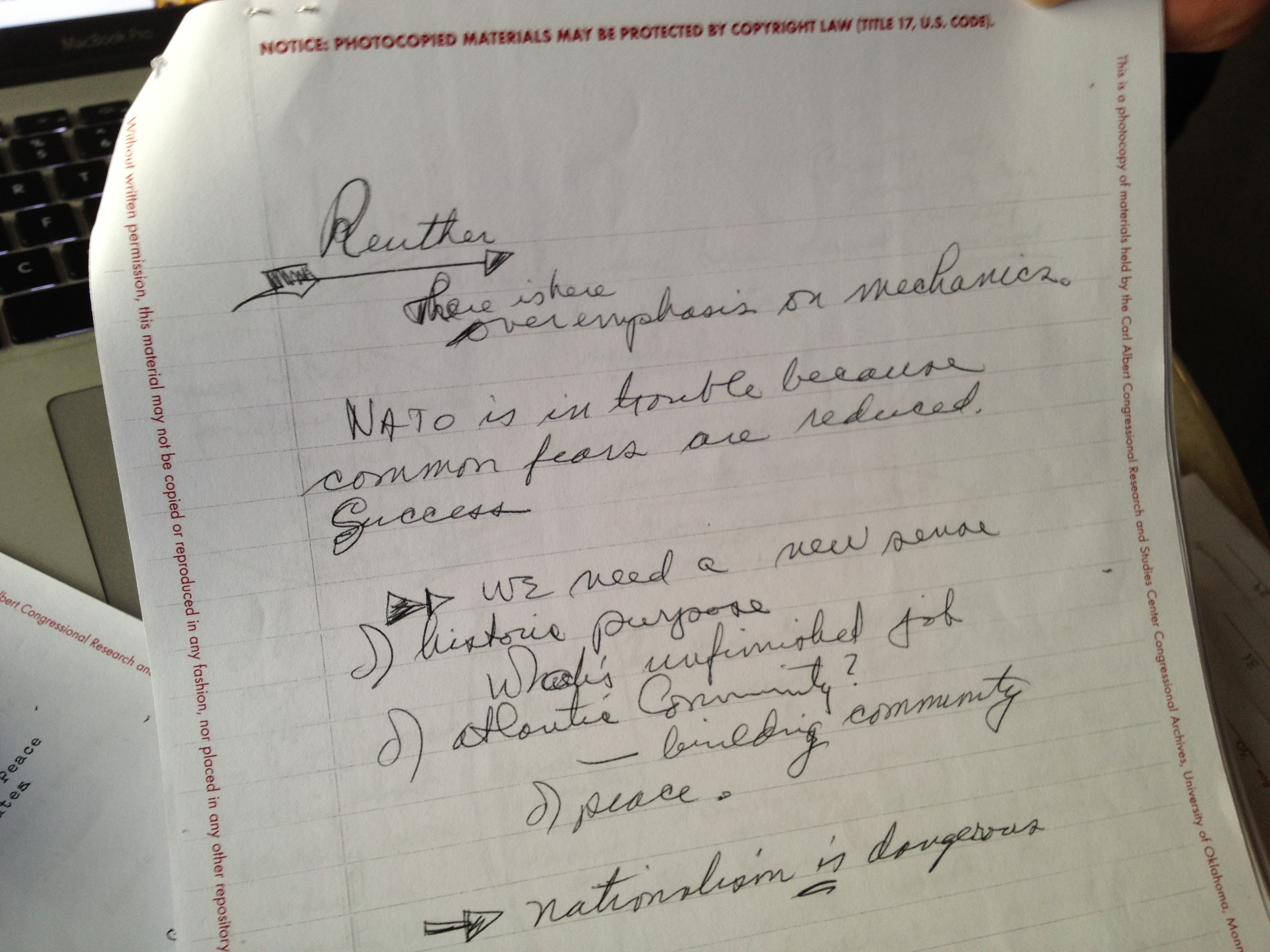
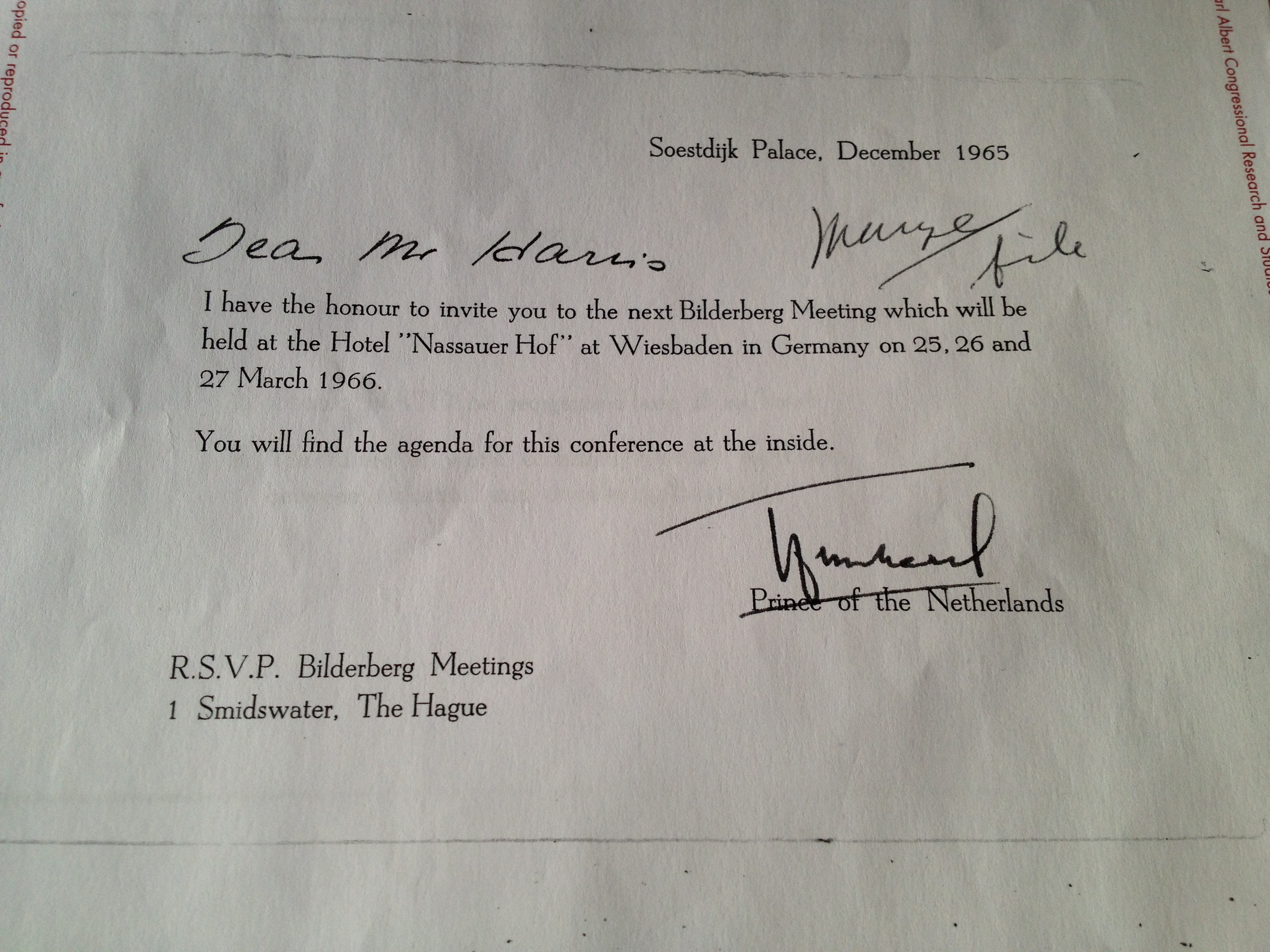
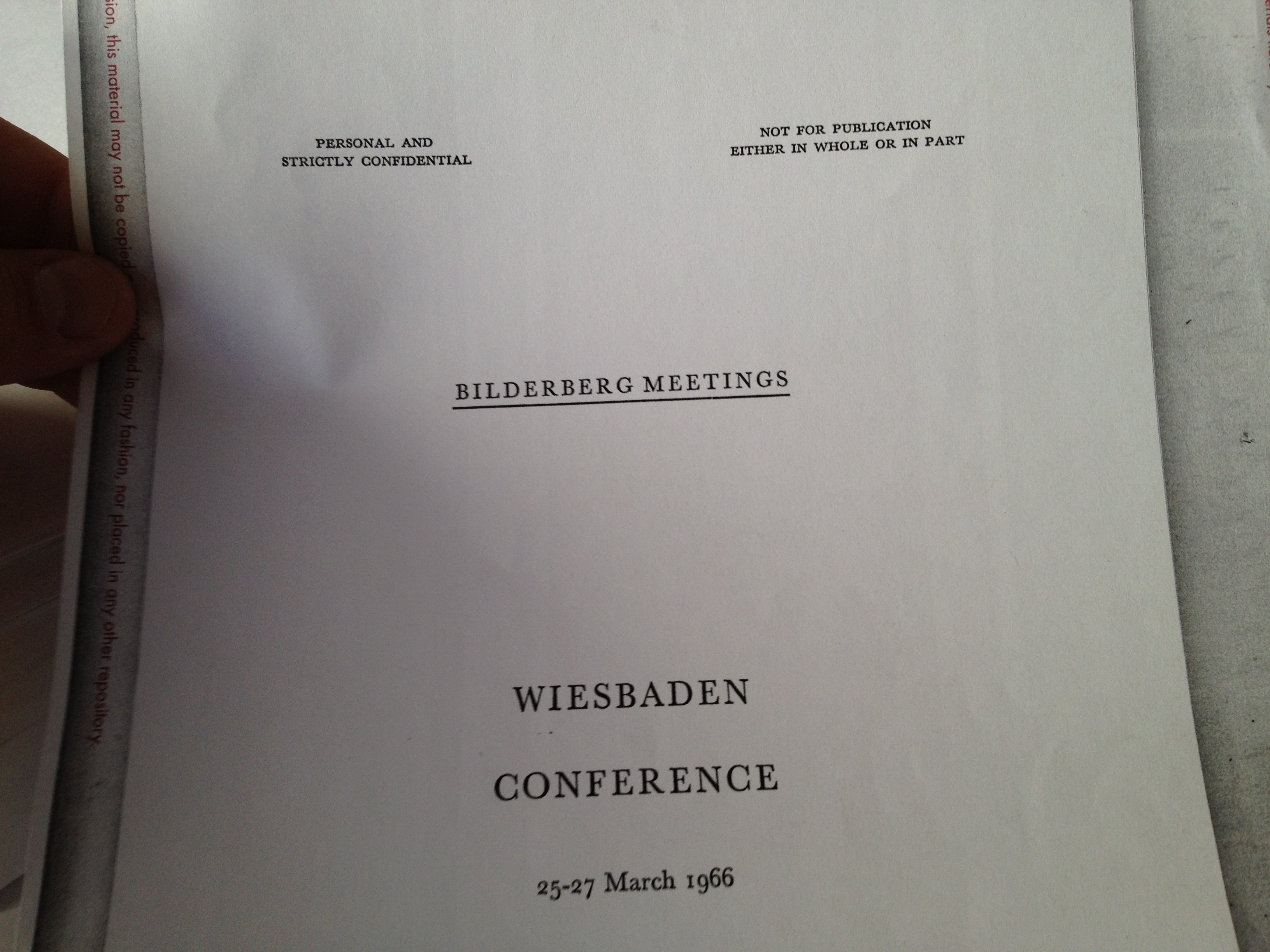
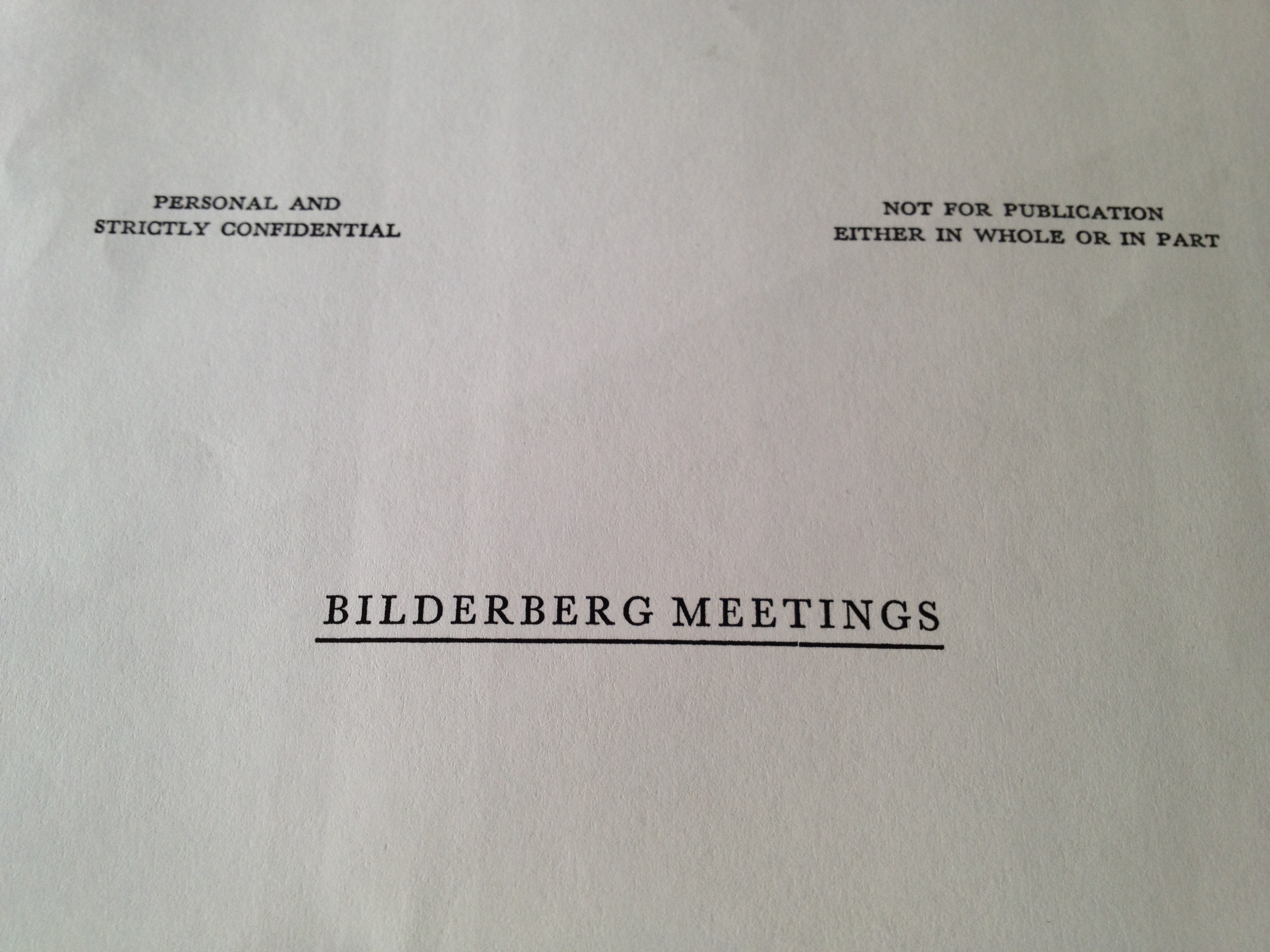
The documents obtained by Infowars are from the Bilderberg Group meeting which took place in Wiesbaden, Germany in late March 1966.. The files are marked “personal and strictly confidential,” and “Not for publication either in whole or in part.” They consist of Bilderberg’s agenda for that year’s confab along with hand-written notes made by Democratic U.S. Senator for Oklahoma Fred R. Harris, who attended the meeting.
Participants in the 1966 conference included well known figures such as David Rockefeller, Zbigniew Brzezinski, and John J. McCloy, who served on the Warren Commission and was a member of the foreign policy establishment group of elders called “The Wise Men.”
Harris had only been in office for less than two years before he was invited to the Bilderberg confab, suggesting he was being sounded out for potential grooming for higher office. The former Senator is still alive and currently works as a professor of political science at the University of New Mexico.
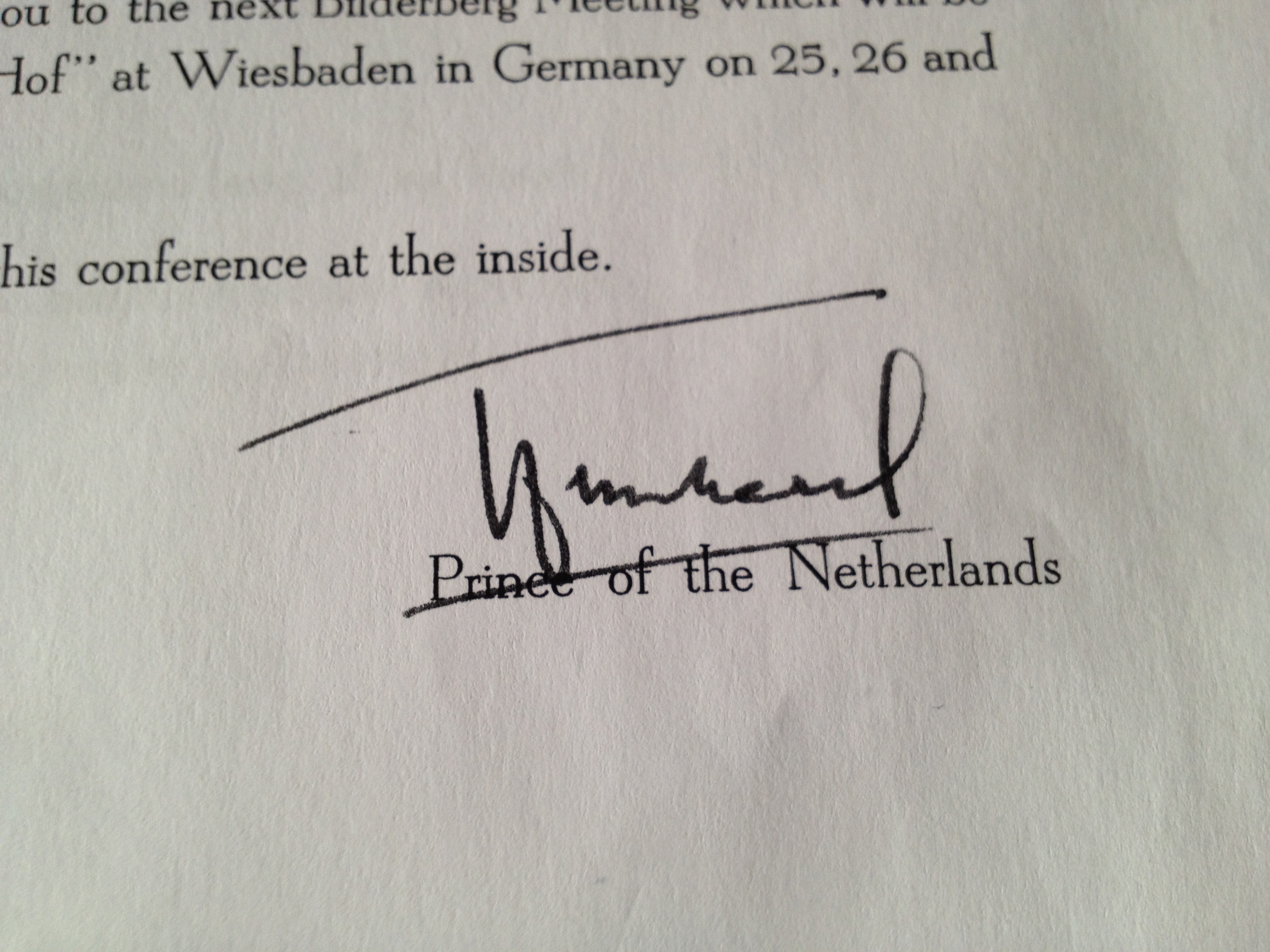
Included in the documents is the official invitation Harris received from Prince Bernhard of the Netherlands, Bilderberg founder and member of the German Nazi party. The letter is personally signed by the Prince.
The most alarming portion of Harris’ hand-written notes concern a speech given during the Bilderberg confab by one time Communist Party member and union leader Walter P. Reuther, who was politically active from the 1930′s up until his death in 1970. Reuther was a leading force in the United Automobile Workers (UAW) and later helped set up the International Confederation of Free Trade Unions.
Conservative icon Barry Goldwater once characterized Reuther as a “more dangerous menace than the Sputnik or anything Soviet Russia might do to America.” Reuther also appeared in Time magazine’s list of the 100 most influential people of the 20th century.
The documents show that even as far back as 1966, Union representatives like Reuther, who called themselves socialists, were selling out their members in favor of secretly scheming with Bilderberg power brokers, many of whomwere titans of capitalism and industry – illustrating how the left/right political paradigm is a fraud.
In addition, Senators like Harris were being indoctrinated by Bilderberg elitists that national sovereignty must end and be replaced by a system of global government.
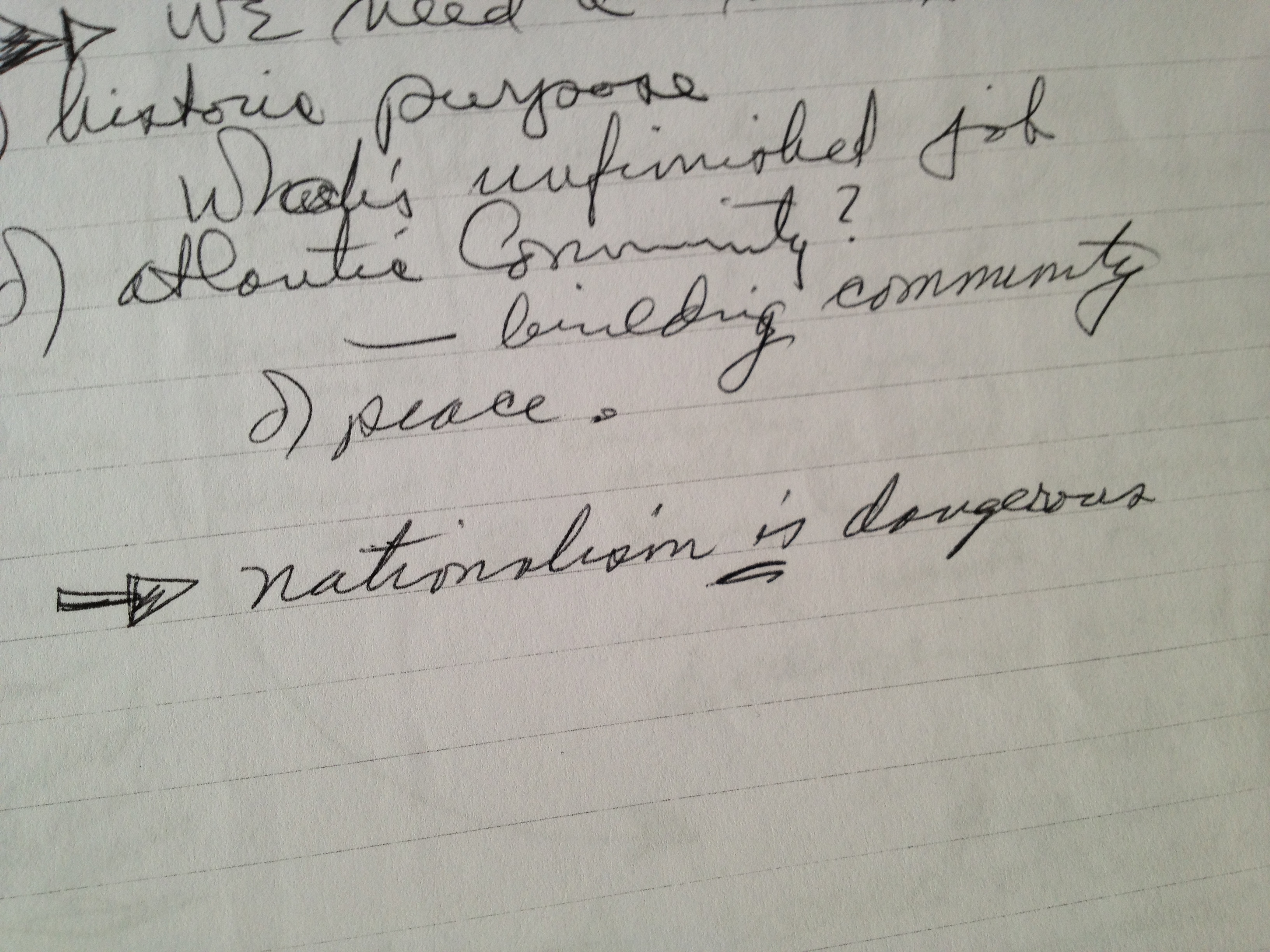
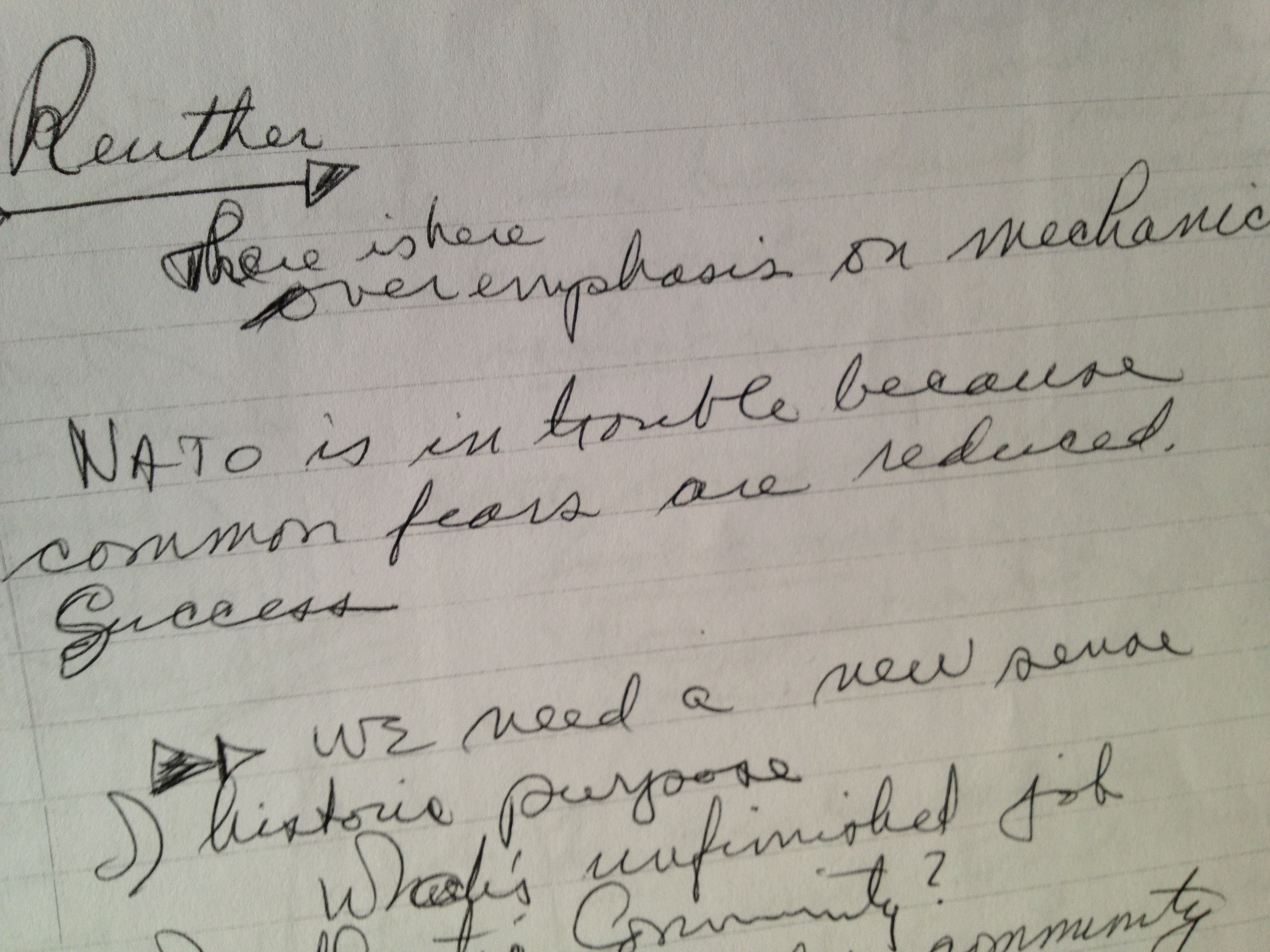
Harris’ notes, made while Reuther was giving his presentation, reveal how Bilderberg were panicked about NATO’s declining relevance and sought to manufacture a new threat to elevate its importance.
“NATO is in trouble because common fears are reduced,” he writes.
The primary threat to Bilderberg’s goal of establishing global government is made clear in Harris’ notes.
“Nationalism is dangerous,” he writes.
In a letter Harris sent to Reuther a few weeks after the conference, the Senator thanks the Union head, writing, “The Bilderberg Conference gave me a real opportunity to learn and widen my horizons. One of the memorable highlights of the meeting was the opportunity to get to know and visit with you.”
We will have more astounding revelations from these leaked documents in the coming days.
View screenshots of the documents below (click for enlargements).

Subscribe to:
Posts (Atom)