Wednesday, June 6, 2012

Google Warns Users They May Become Collateral Damage in Cyber War

Google announced on Tuesday it will begin displaying a warning to users who the internet giant believe are under state-sponsored malware attack.

“We are constantly on the lookout for malicious activity on our systems, in particular attempts by third parties to log into users’ accounts unauthorized. When we have specific intelligence – either directly from users or from our own monitoring efforts – we show clear warning signs and put in place extra roadblocks to thwart these bad actors,” Eric Grosse, VP of Security Engineering, said in a statement posted on Google’s security blog.

Google has not revealed what criteria or technology will be used to detect the attacks.

The move comes following high-profile attacks on Google. More than two years ago western corporations claimed they were attacked by Chinese hackers. In 2001, the U.S. government said senior officials with Gmail accounts were targeted. In response, Google moved servers from mainland China to Hong Kong.

Russian activists opposed to the re-installment of the Putin regime also claim their Google accounts were targeted. Russia’s FSB, heir to the old Soviet KGB, have repeatedly called for a crackdown on the internet and other “new technologies” it believes are being used by western intelligence agencies to “create and maintain constant tension in societies.”

Earlier this year, a “self-professed” Iranian hacker group claimed they had compromised the accounts of thousands of NASA researchers. The attack came after the U.S. and Israel attacked Iranian computer networks with the Stuxnet virus. It was reported last week that the Obama administration authorized an ambitious cyber attack on Iran as part of its ongoing effort to destabilize the country and derail its fledgling nuclear program.

It is unclear if Google will also protect its networks against attacks waged by the Pentagon. DARPA, the Pentagon’s Defense Advanced Research Projects Agency, has launched its Plan X, an effort to recruit “the private sector, universities and even computer-game companies as part of an ambitious effort to develop technologies to improve its cyberwarfare capabilities, launch effective attacks and withstand the likely retaliation,” according to the Washington Post.

Finally, it should be noted that Google is a prime target for a number of reasons, most notably for the role it plays as a key intelligence asset to both the CIA and the NSA. It has supplied the core search technology for Intellipedia, a highly-secured online CIA system and has shared a close relationship with the CIA, NSA, and government national security officials.

“Google’s connection with the CIA and its venture capital firm extends to sharing at least one key member of personnel. In 2004, the Director of Technology Assessment at In-Q-Tel, Rob Painter, moved from his old job directly serving the CIA to become ‘Senior Federal Manager’ at Google.,” writes Eric Sommer.

In-Q-Tel, a venture capital firm established by the CIA, also had a hand in creating the wildly popular social network Facebook. “The second round of funding into Facebook ($US12.7 million) came from venture capital firm Accel Partners. Its manager James Breyer was formerly chairman of the National Venture Capital Association, and served on the board with Gilman Louie, CEO of In-Q-Tel,” writes Matt Greenop.

Considering the Obama administration’s open effort to sabotage Iran – and more than likely other official enemies, including Syria, Russia and China – retaliatory cyber attacks should be expected.

Google is now warning hapless users that they may become victims – or collateral damage – of these retaliatory attacks.

Source: Infowars

Leaked Bilderberg Documents: “Nationalism Is Dangerous”

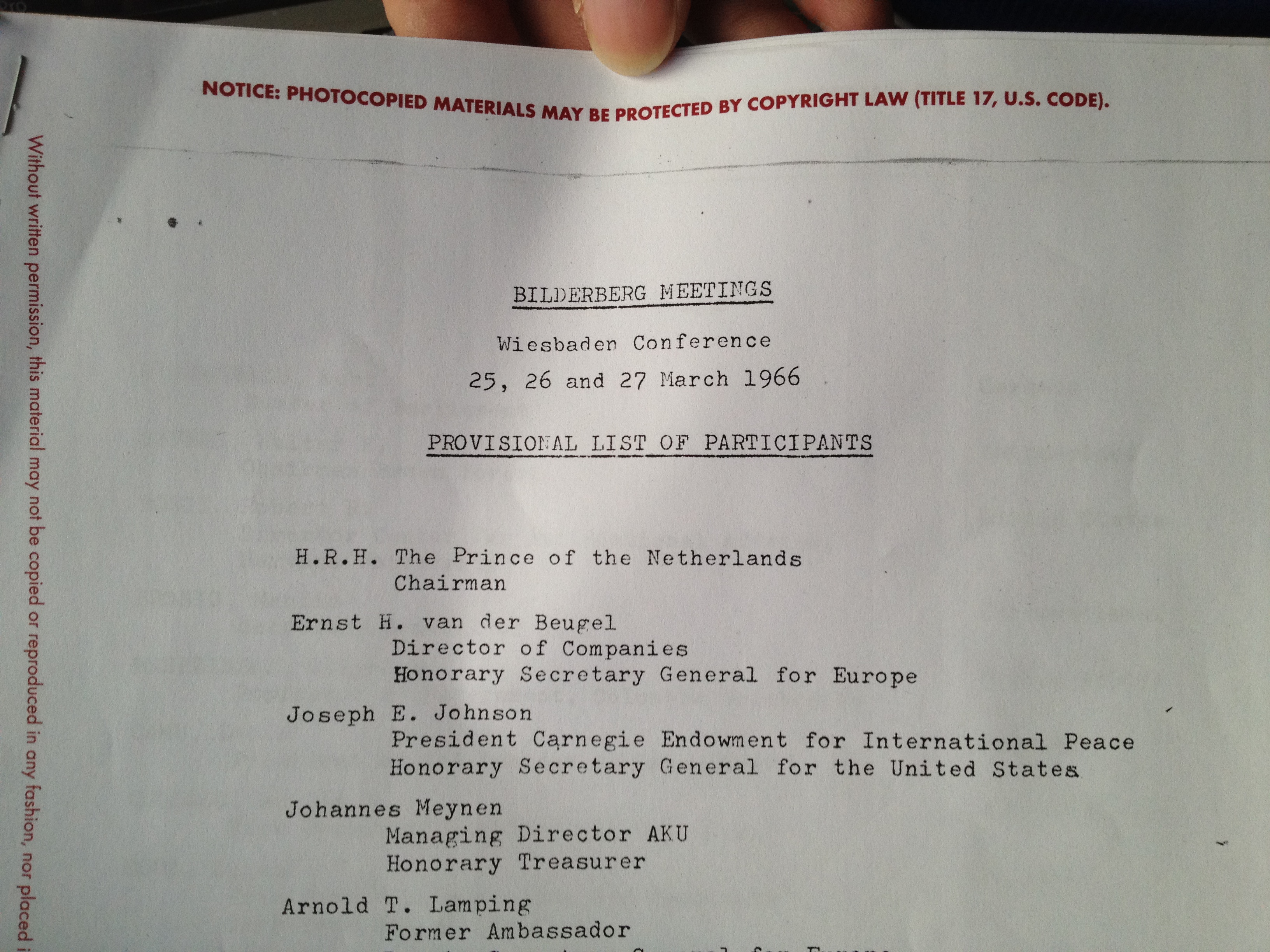
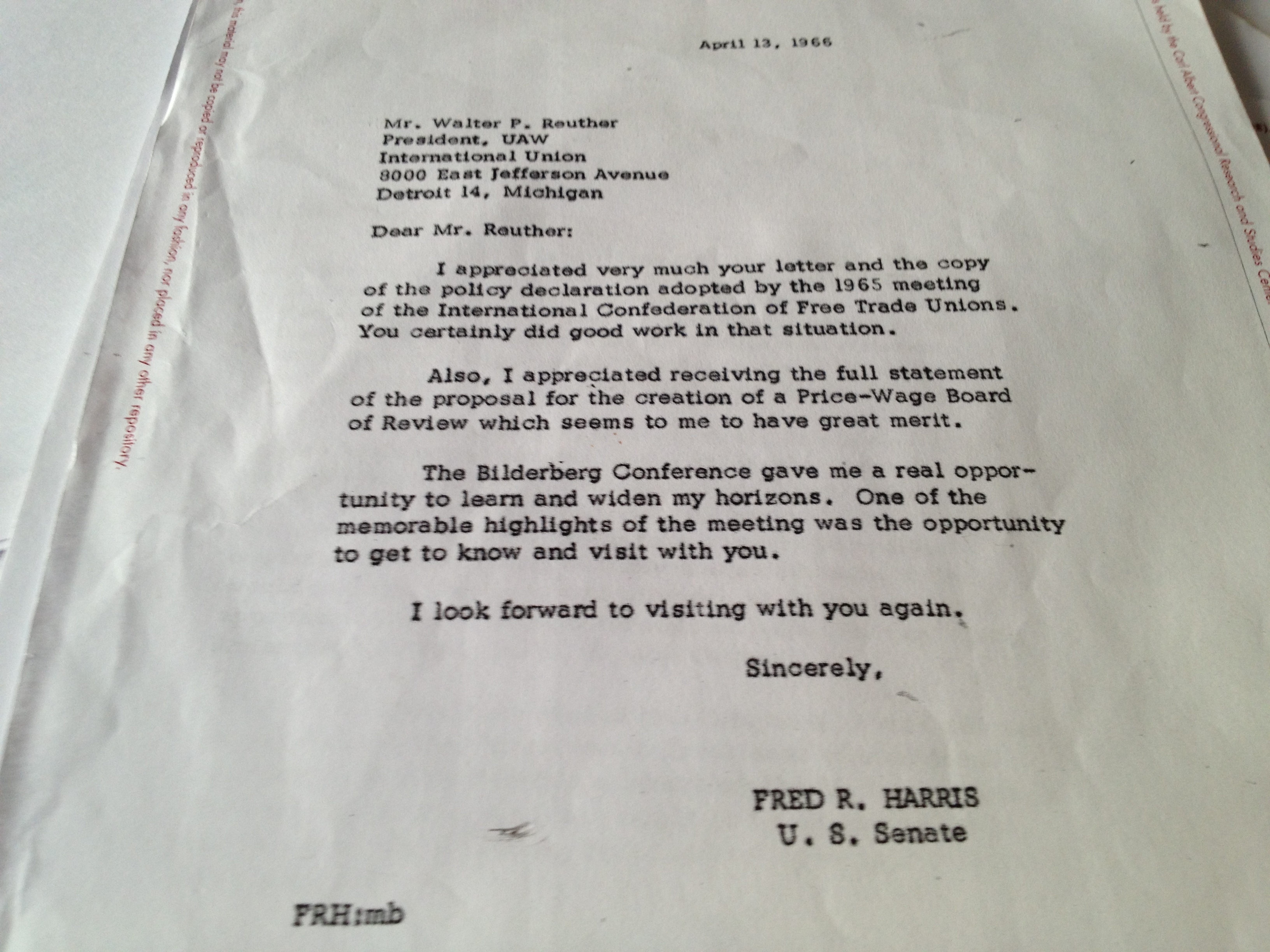
Leaked documents from the 1966 Bilderberg Group conference exclusively obtained by Infowars betray how even as far back as five decades ago U.S. Senators were being indoctrinated with the belief that “nationalism is dangerous” by Bilderberg elitists, in addition to top union heads scheming behind their members’ backs with titans of capitalism and industry.

Previously leaked documents from meetings have illustrated how the Bilderberg Group, contrary to the media-generated myth that the confab represents a harmless talking shop, sets the consensus for policy decisions sometimes decades in advance.

A clear example is the 1955 Bilderberg meeting held in Garmisch-Partenkirchen, West Germany. Documents read by the BBC and later released by Wikileaks divulge how Bilderberg members were discussing the creation of the euro single currency nearly 40 years before it was officially introduced in the 1992 Maastricht Treaty.

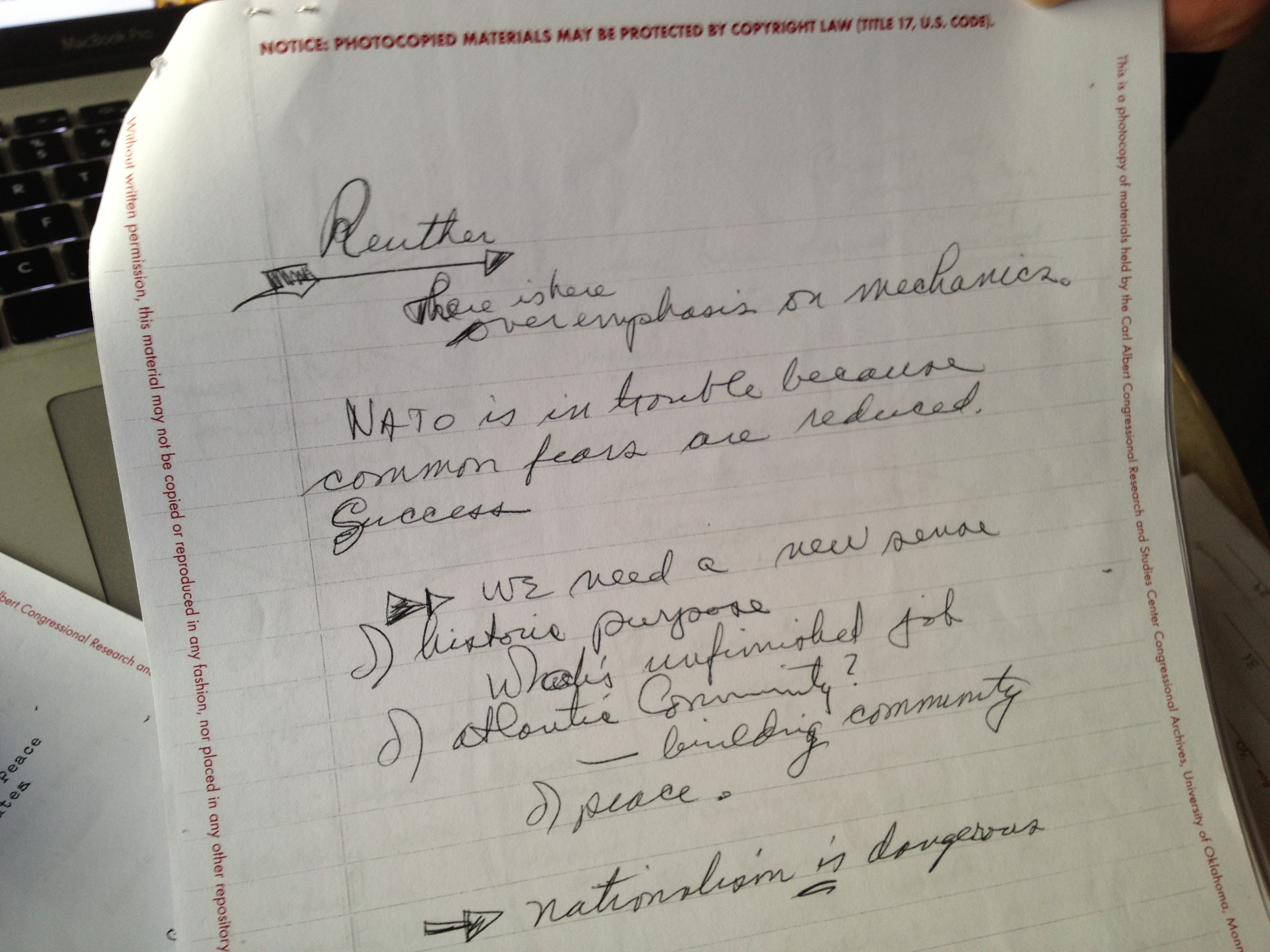
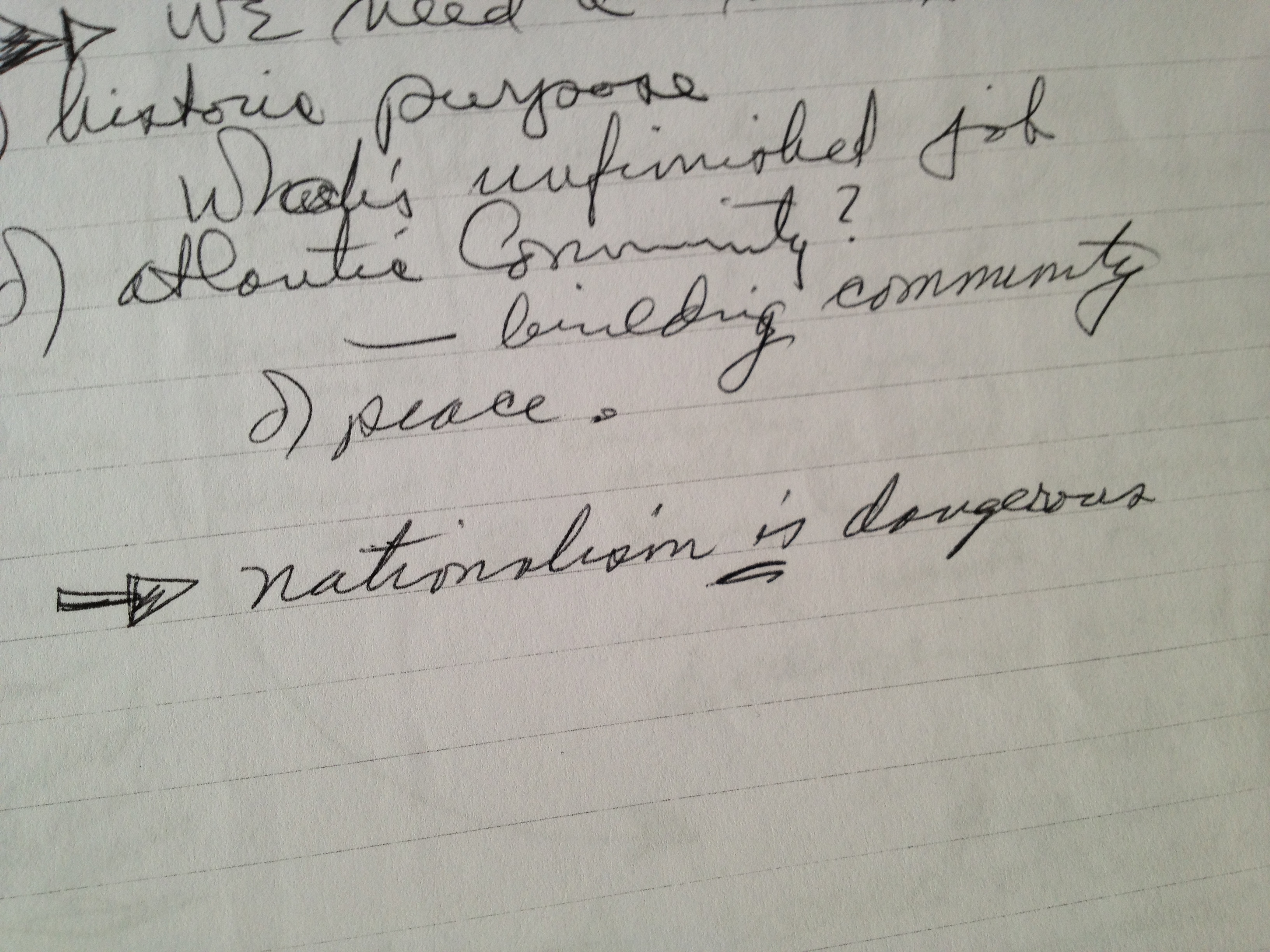
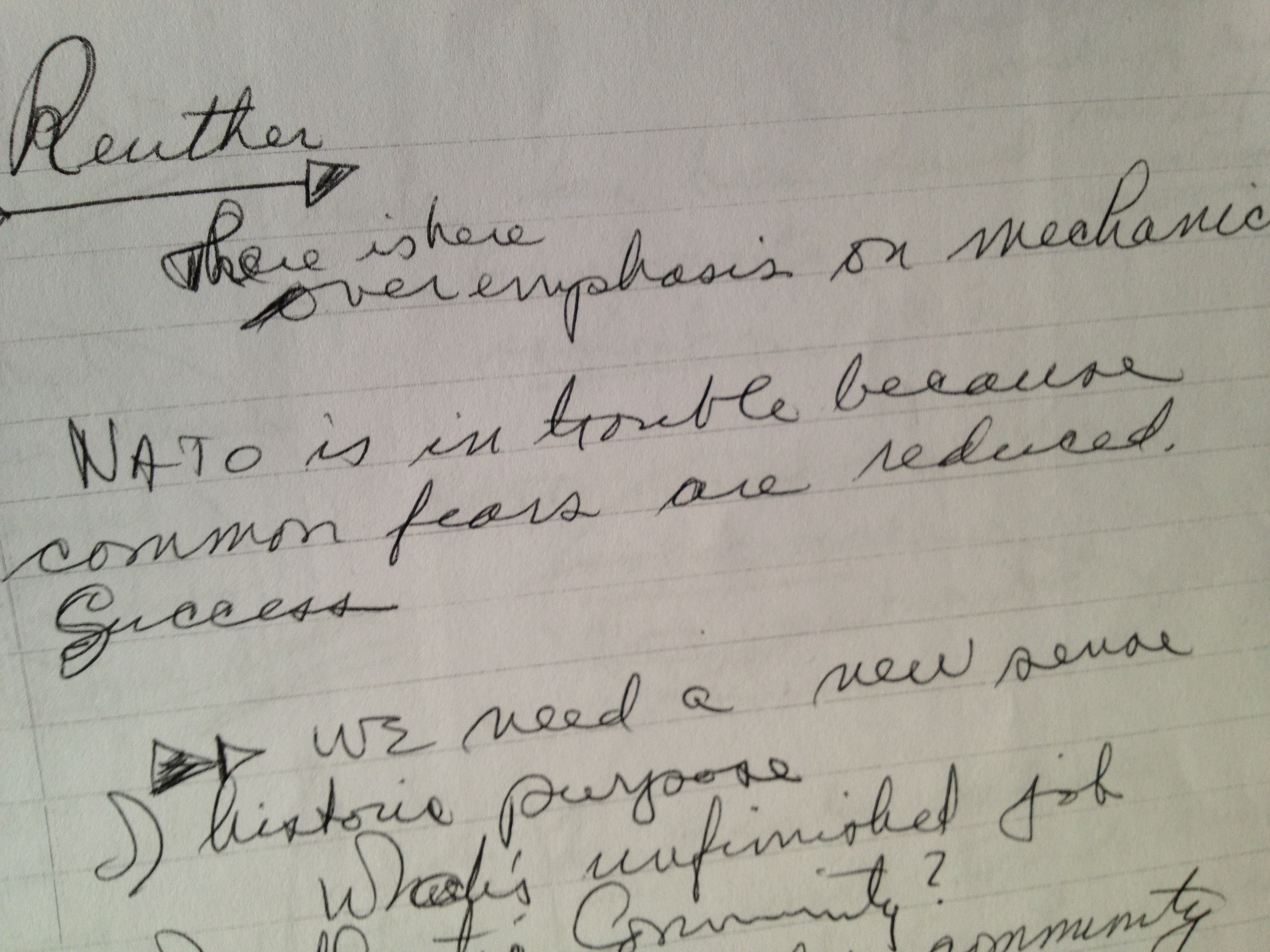
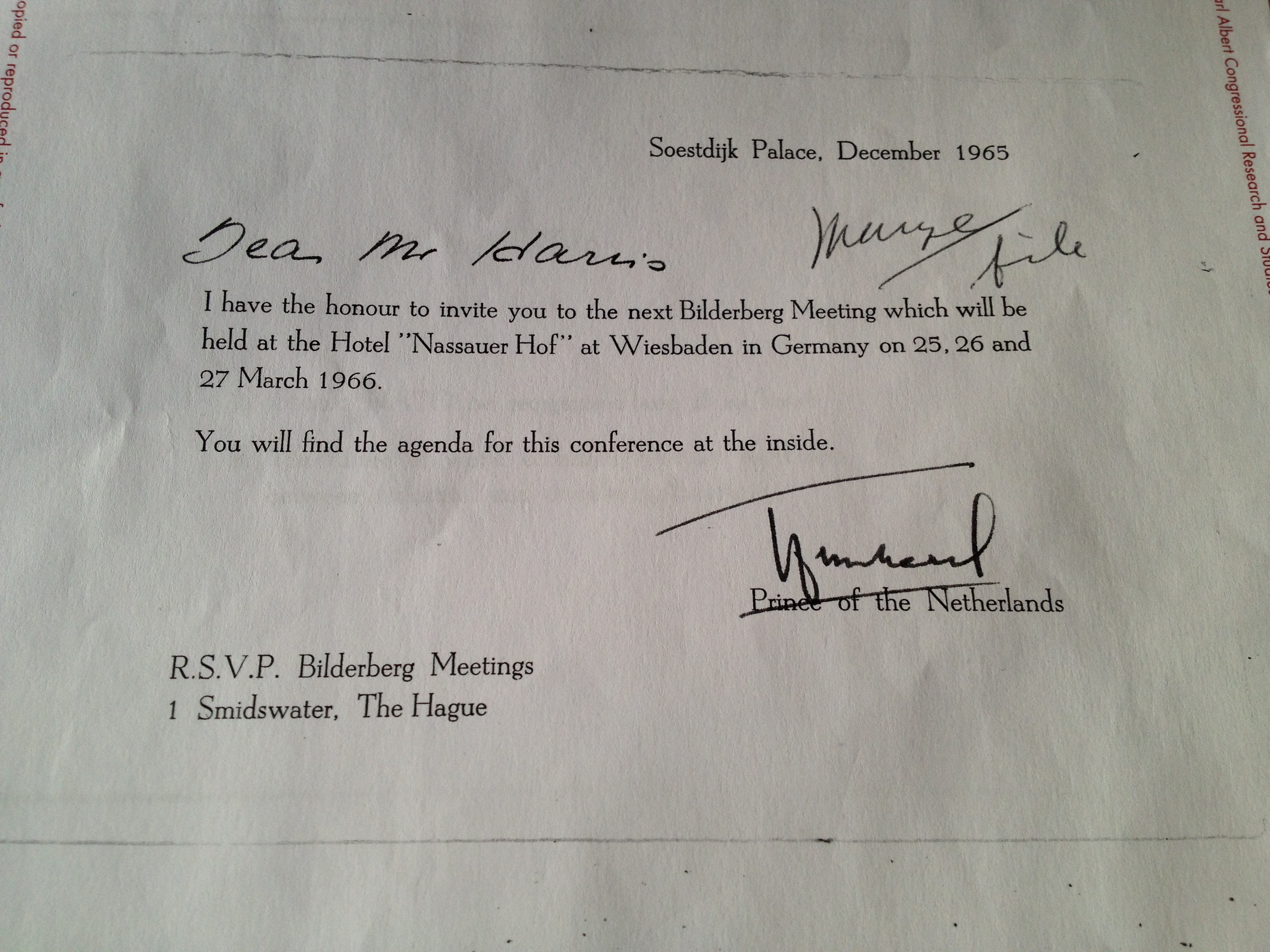
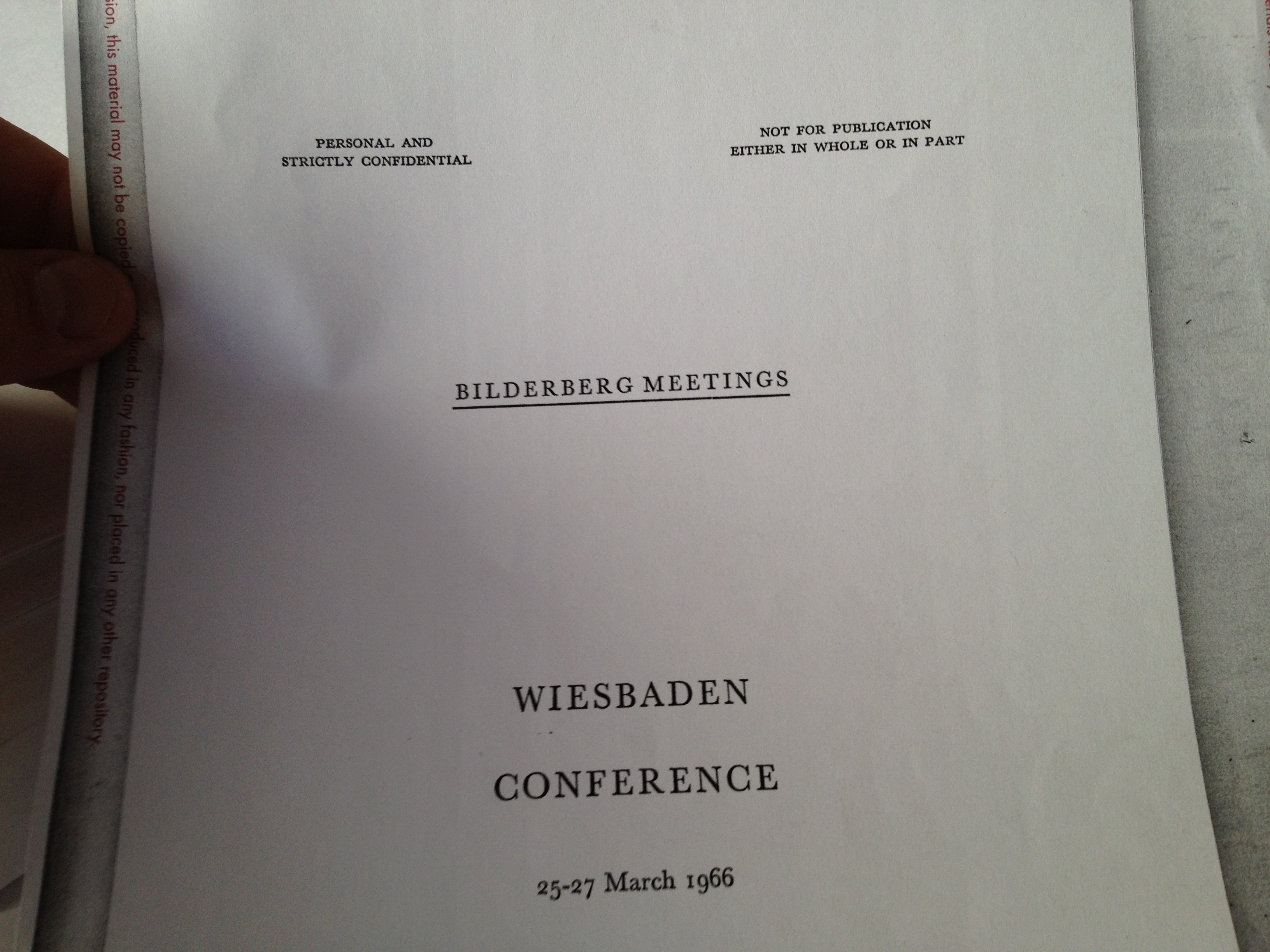
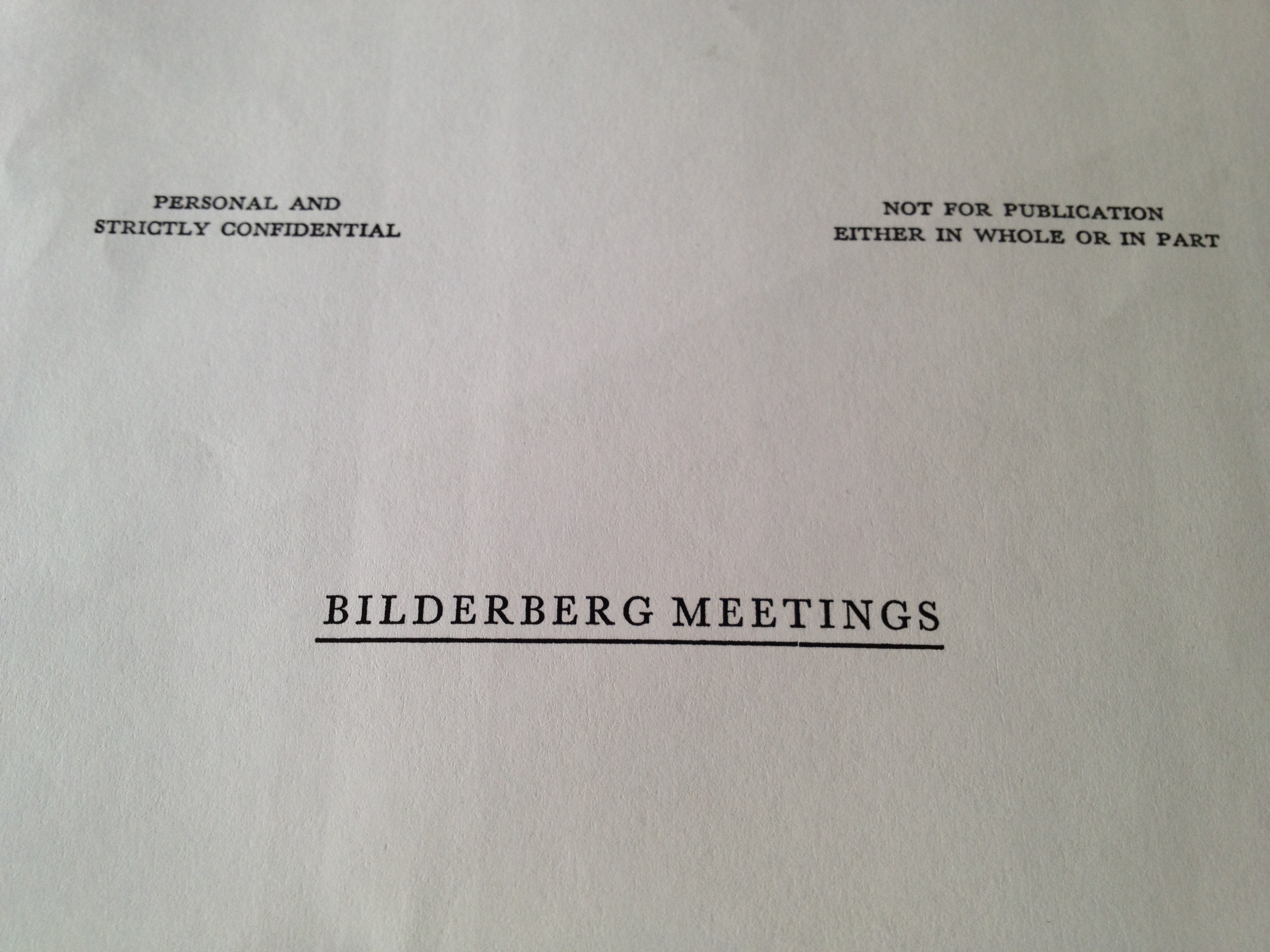
The documents obtained by Infowars are from the Bilderberg Group meeting which took place in Wiesbaden, Germany in late March 1966.. The files are marked “personal and strictly confidential,” and “Not for publication either in whole or in part.” They consist of Bilderberg’s agenda for that year’s confab along with hand-written notes made by Democratic U.S. Senator for Oklahoma Fred R. Harris, who attended the meeting.

Participants in the 1966 conference included well known figures such as David Rockefeller, Zbigniew Brzezinski, and John J. McCloy, who served on the Warren Commission and was a member of the foreign policy establishment group of elders called “The Wise Men.”

Harris had only been in office for less than two years before he was invited to the Bilderberg confab, suggesting he was being sounded out for potential grooming for higher office. The former Senator is still alive and currently works as a professor of political science at the University of New Mexico.

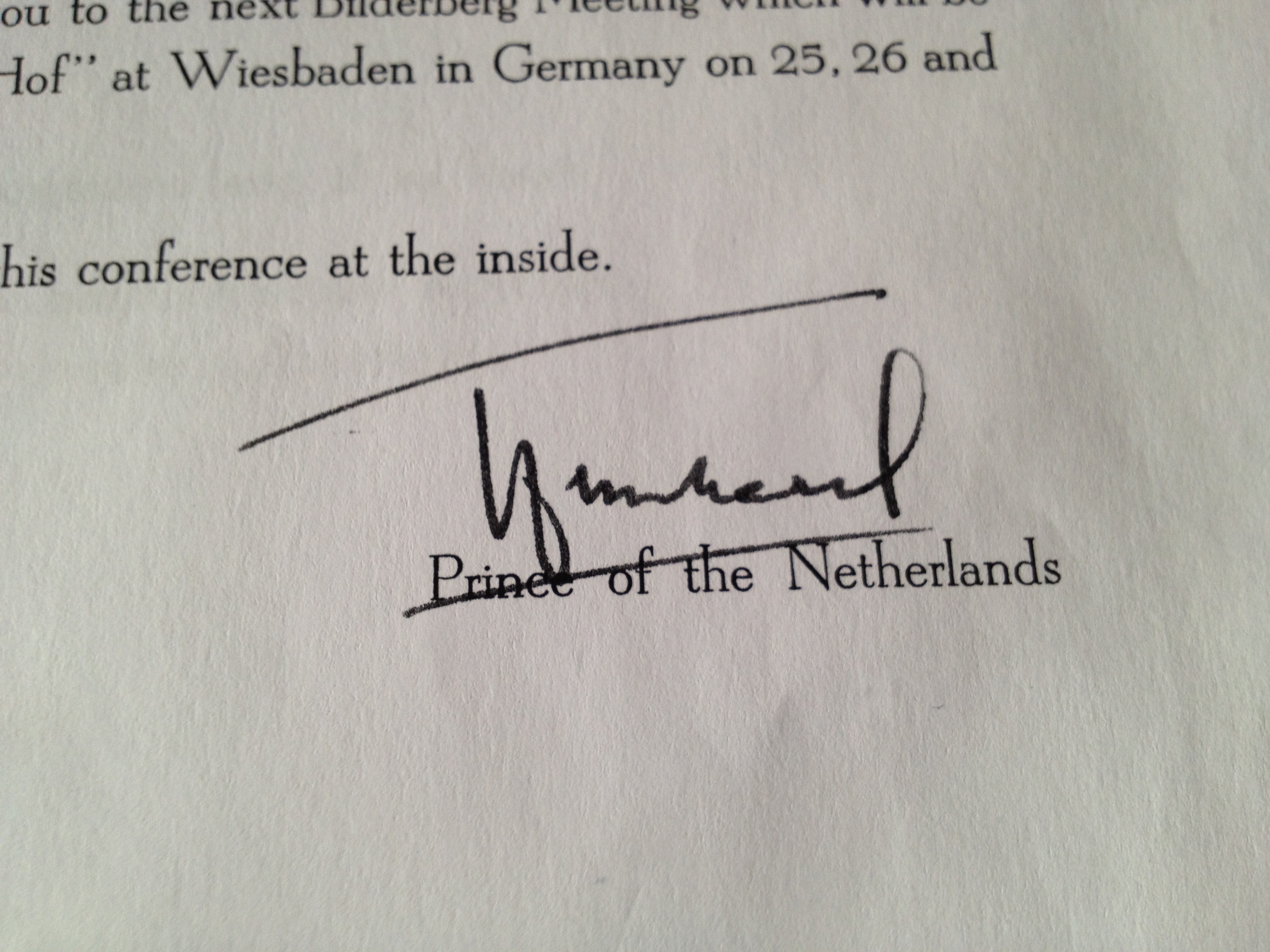
Included in the documents is the official invitation Harris received from Prince Bernhard of the Netherlands, Bilderberg founder and member of the German Nazi party. The letter is personally signed by the Prince.

The most alarming portion of Harris’ hand-written notes concern a speech given during the Bilderberg confab by one time Communist Party member and union leader Walter P. Reuther, who was politically active from the 1930′s up until his death in 1970. Reuther was a leading force in the United Automobile Workers (UAW) and later helped set up the International Confederation of Free Trade Unions.

Conservative icon Barry Goldwater once characterized Reuther as a “more dangerous menace than the Sputnik or anything Soviet Russia might do to America.” Reuther also appeared in Time magazine’s list of the 100 most influential people of the 20th century.

The documents show that even as far back as 1966, Union representatives like Reuther, who called themselves socialists, were selling out their members in favor of secretly scheming with Bilderberg power brokers, many of whomwere titans of capitalism and industry – illustrating how the left/right political paradigm is a fraud.

In addition, Senators like Harris were being indoctrinated by Bilderberg elitists that national sovereignty must end and be replaced by a system of global government.

Harris’ notes, made while Reuther was giving his presentation, reveal how Bilderberg were panicked about NATO’s declining relevance and sought to manufacture a new threat to elevate its importance.

“NATO is in trouble because common fears are reduced,” he writes.

The primary threat to Bilderberg’s goal of establishing global government is made clear in Harris’ notes.

“Nationalism is dangerous,” he writes.

In a letter Harris sent to Reuther a few weeks after the conference, the Senator thanks the Union head, writing, “The Bilderberg Conference gave me a real opportunity to learn and widen my horizons. One of the memorable highlights of the meeting was the opportunity to get to know and visit with you.”

We will have more astounding revelations from these leaked documents in the coming days.

View screenshots of the documents below (click for enlargements).

Source: Infowars

Tuesday, June 5, 2012

Spain is in 'total emergency’, the EU in total denial

I’ve never actually heard the term “total emergency” before, at least not in the context of global economics. It sounds like the title of a disaster movie. When it is uttered in sober tones by the elder statesman of an advanced democracy to describe his country’s financial condition, the effect is rather startling.

The man who delivered this apocalyptic judgment, former Spanish prime minister Felipe González, being a socialist, might be expected to detest austerity programmes that require cuts to government spending. But there seemed to be few disinterested observers of Spain’s economy prepared to quibble with his assessment.

Forget Grexit. Greece’s teeny, tiny economy is a footnote now. As is Ireland’s decision – which seemed more like a sigh of resignation than a plebiscite – to engage in however much self-flagellation the EU gods insist on, for however long it takes. What might have seemed dramatic a week or so ago has now shrivelled in importance by comparison to the realistic possibility of a spectacular crash in the fourth largest economy in the EU. Spexit (and Spanic) are lodged in the lexicon, and have become part of the psychological reality that moves markets. The equivalent of more than £55 billion was withdrawn and transported out of Spain last month – and that was before the country’s largest bank was nationalised. No one seems to be kidding himself that the collapse of the Spanish economy could be somehow weathered and overcome, as the default of Greece might be.

There is no talk of firewalls, or of simply letting Spain go, or of the European banking system being re-capitalised to compensate for the losses that it would suffer. Nope. This is it. The cancer has now spread to the vital organs of the EU. Spain is not a peripheral Mediterranean country. It is not an insignificant player in the political project. It is not a marginal going-along-for-the-ride-and-the-free-money passenger on the euro train. Not only is its economy so large as to be indispensable, but its ties with Italy mean that the Italian economy (which is the third largest in the EU) would be fatally compromised by its fall. “Itexit” is almost unpronounceable, so perhaps it’s fortunate that it will never be required: after Spexit, there would be nothing left to exit from.

With Spain’s “total emergency”, the point at which denial and bluster become absurd has been well and truly reached, but this being the EU, the gamesmanship goes on. Still the pointless demands for “decisive action” continue, even though the only action that would possibly constitute a remedy is politically untenable if member states are to maintain any pretence of democratic accountability.

To repeat (sorry, but it does seem necessary) what I have said before on these pages: however much she is beaten about the head by blowhards in Brussels, Rome, London and Washington, Angela Merkel cannot let the ECB (in effect, the Bundesbank) print money to soak up the debts of Spain, Greece or Italy. To do that would not simply be to fly in the face of her own electorate’s wishes. (What the hell, you might say – every European political leader is doing that.) It would be to contravene the constitution which was enforced upon Germany by the post-war settlement. In other words, it would be both undemocratic and illegal within the terms of the German nation state which, for all the hokum about European political union, still exists. And there it is.

This is the heart of the irreconcilable contradiction on which the euro is being broken. As everyone has been saying, in order to be viable in the face of market pressures, a genuine currency (as opposed to a pretend one) must have a “lender of last resort” – a true central bank like the US Federal Reserve System. But this is impossible within the EU because the constitutions of member states are not compatible with each other or with the principle of underwriting debt across national boundaries (as the states of the US are under their genuinely federal system). So, either the existing democratic institutions and historical principles of all EU countries must be forcibly reconciled in a Year Zero political reconstruction, or there can never be a monetary union (let alone fiscal union) that will be sustainable. This is where we are.

What would such a reconstructed political entity look like (assuming that someone in the delusional European political class should think of trying it)? Presumably it would involve wealth redistribution on an epic scale – since the most urgent problem to be remedied is the disparity between the poor, indebted states and the rich, thrifty ones. Fiscal transfers (meaning Germany pays for everybody) would be an accepted, perhaps automatic, mechanism, thus creating more or less permanent dependency of the less productive on the more productive. We have grown accustomed in Britain to this form of cross-subsidy, in which wealth produced in the South East is channelled to the North. Even within one country with a shared identity and linguistic culture, it breeds some resentment and resistance.

Applied across the boundaries of nations whose peoples have profoundly different historical experiences and social attitudes – and whose democratic institutions have been shaped by their collective memories – it would be incendiary. And it is worth saying that there is nothing invidious in this. For Germans to refuse to bend in the face of shrill demands to (as they see it) debauch the currency is a sign of conscience: an unwillingness to forget the shame and criminality into which such a process led them in the last century. It is ironic that Germany itself was one of the great drivers of economic union, and specifically of the democratic socialist model in which “the rich nations help the poor ones” as José Manuel Barroso (who seems less and less capable of remaining in touch with reality) likes to put it.

Now the “socialist” and the “democratic” sides of this utopian vision are heading for a collision: the EU can embrace wealth-redistribution wholeheartedly – with the full works of a central bank, fiscal uniformity and no nonsense about the will of the people – or it can accept the separate, and morally defensible, differences between its member states which will mean thinking seriously about other options than browbeating Germany. Generally, when given a choice, Europe ditches the democracy and keeps the socialism – so I wouldn’t get your hopes up.

Source: BBC

Hillary Clinton promises NATO membership to Georgia

U.S. Secretary of State Hillary Clinton said Washington will continue assistance to Georgia in the field of security and defense and supports country’s NATO membership.

The Secretary spoke at the opening of the U.S.-Georgia Strategic Partnership Commission plenary session in Batumi, Georgia.

Georgia is strategic partner of U.S. as regards the issues of regional and world security. She stressed that increase in combat readiness of Georgia and matching it with NATO standards continues within the framework of agreement reached by both countries’ presidents, Gruziya Online reports.

“We continue educating and equipping the Georgian army which participates in the operation in Afghanistan, therefore increasing combat readiness of Georgia,” she said.

She reiterated Washington’s support for Georgia’s integration into NATO.

Source: News AM

Syria declares Western ambassadors unwelcome

Syria has declared as unwelcome the ambassadors of several Western states, a week after governments around the world expelled its top diplomats.

The US, UK, French and Turkish envoys were among those designated "personae non gratae". Many have already left.

President Bashar al-Assad has blamed outside powers for Syria's divisions.

Meanwhile, the UN has said the Syrian government has agreed to allow aid agencies to enter the four provinces that have seen the most violence.

"This agreement was secured in Damascus with the government there, in writing," John Ging, the director of operations for UN Office for the Coordination of Humanitarian Affairs (OCHA) told reporters in Geneva after a meeting of the Syrian Humanitarian Forum.

"Freedom of movement, unimpeded access for humanitarian action within Syria, is what it's all about now. The good faith of the [Syrian] government will be tested on this issue today, tomorrow and every day," he added.

Procedures would be streamlined for granting visas to staff from nine UN agencies and seven international NGOs, Mr Ging said. The UN will open field offices in the provinces of Deraa, Deir al-Zour, Homs and Idlib. Continue reading the main story

The UN has been trying for months to get its aid workers into Syria, but with little success, reports the BBC's Imogen Foulkes in Geneva. Visa applications have been delayed or denied, and supplies of aid blocked.

The UN estimates that one million people are in need of assistance inside Syria, and that the number will likely increase after further assessments.

In a separate development, Russian President Vladimir Putin and his Chinese counterpart, Hu Jintao, urged the international community to continue to support the peace plan negotiated by the UN and Arab League envoy to Syria, Kofi Annan, Chinese state TV said.

But Saudi Arabia's foreign minister said Gulf Arab states had "begun to lose hope in the possibility of reaching a solution... within this framework".

Mr Annan is to address the UN Security Council in New York on Thursday. He is believed to want a "serious review" of efforts to implement his plan. 'Importance of dialogue'

Last week, at least 13 countries expelled top Syrian diplomats in protest at the massacre of more than 100 people, including 49 children, in the Houla area of Homs province. Turkey expelled all Syrian embassy staff. Continue reading the main story “Start Quote

We hope the countries that initiated these steps will adopt those principles, which would allow relations to return to normal again”

Syrian foreign ministry

In what it described as a reciprocal move on Tuesday, the Syrian government announced that 17 diplomats from the US, UK, Switzerland, France, Italy, Spain, Belgium, Bulgaria, Germany and Canada were now considered "personae non gratae".

All Turkish diplomatic staff were also declared unwelcome.

"The Syrian Arab Republic still believes in the importance of dialogue based on principles of equality and mutual respect," a foreign ministry statement said.

"We hope the countries that initiated these steps will adopt those principles, which would allow relations to return to normal again."

The BBC's Jim Muir in Beirut says it will be a long time before the Western states are prepared to re-establish diplomatic ties.

US ambassador Robert Ford was called back to Washington in October over fears for his safety, while all British embassy staff were withdrawn in March on security grounds.

France also closed its embassy that month in protest at the "scandalous" repression of dissent by the government.

Read more: BBC

Monday, June 4, 2012

Seeds of doubt: Brazilian farmers sue Monsanto

Five million Brazilian farmers are locked in a lawsuit with US-based biotech giant Monsanto, suing for as much as 6.2 billion euros. They say that the genetic-engineering company has been collecting royalties on crops it unfairly claims as its own.

The farmers claim that Monsanto unfairly collects exorbitant profits every year worldwide on royalties from “renewal” seed harvests. “Renewal” crops are those that have been planted using seed from the previous year’s harvest. While the practice of renewal farming is an ancient one, Monsanto disagrees, demanding royalties from any crop generation produced from its genetically-engineered seed. Because the engineered seed is patented, Monsanto not only charges an initial royalty on the sale of the crop produced, but a continuing 2 per cent royalty on every subsequent crop, even if the farmer is using a later generation of seed.

"Monsanto gets paid when it sell the seeds. The law gives producers the right to multiply the seeds they buy and nowhere in the world is there a requirement to pay (again). Producers are in effect paying a private tax on production," Jane Berwanger, lawyer for the farmers told the Associated Press reports.

In the latest installment of the legal battle erupting in South America, the Brazilian court has ruled in favor of the Brazilian farmers, saying Monsanto owes them at least US$2 billion paid since 2004. Monsanto, however, has appealed the decision and the case is ongoing.

In essence, Monsanto argues that once a farmer buys their seed, they have to pay the global bio-tech giant a yearly fee in perpetuity – with no way out.

At stake is Brazil’s highly profitable and ever growing soybean production. Last year, Brazil was the world's second producer and exporter of soybean behind the United States, according to the AFP report. The crops can be used for anything from animal feed to bio fuel, and worldwide demand is growing.

Genetically engineered soy first appeared illegally in Brazil in the 1990’s, smuggled in from neighboring Argentina. The Brazilian farmers found the seed attractive despite the ban in place from the Brazilian authorities because Monsanto had specifically designed the seed to be resistant to its own immensely powerful and popular herbicide Roundup.

When used in tandem, the strong herbicide will kill the weeds while allowing the soy crops to grow unimpeded. After the ban was lifted, genetically modified seed flooded the Brazilian market, and now 85 per cent of the Brazilian soy crop is genetically-engineered. Soy has been extremely successful in Brazil, currently making up 26 per cent of the country’s farm exports last year and netting Brazil a total of $24.1 billion, according to AP. However, Brazil’s farmers were apparently unaware there would be a heavy price to pay.

To make a deal with Monsanto is to make a deal with a company that is one the most powerful and pervasive food giants in the world. It is the world’s number one seed developer, and its patented genes have been inserted into 95 per cent of all American soy, and 80 per cent of all American corn crops. Monsanto has repeatedly levied large damage suits against independent farmers that have unknowingly or unwittingly used their seed.

And Monsanto’s reach goes far beyond agriculture.

Monsanto is also the world’s largest manufacturer of synthetic bovine growth hormone, injected into cows in order to stimulate greater milk production. The widespread pressure by the company to use the chemical and the subsequent measures taken by Monsanto to suppress information regarding the potential health risks sparked uproar among American farmers.

When dairy producers that did not use Monsanto’s products began labeling their products as “Hormone Free” or “Organic”, Monsanto slapped them with a lawsuit as recently as 2008, claiming the labels amounted to negative advertising against hormone-produced milk.

Director of corporate communications for Monsanto, Phil Angell, summed up Monsanto’s take on the issue in a report by food author Michael Pollan for New York Times Magazine in 1998: "Monsanto should not have to vouch for the safety of biotech food. Our interest is in selling as much of it as possible. Assuring its safety is FDA's job."

Source: RT

Saturday, June 2, 2012

The UN Wants Complete Control Over The Internet And That Would Mean Unprecedented Censorship, Taxes And Surveillance

One of the fastest ways to ruin the Internet would be to put the United Nations in charge of it. Unfortunately, that is exactly what the United Nations wants. The United Nations is now pushing very hard for complete control over the Internet. A proposal that has the support of China, Russia, India, Brazil, Saudi Arabia and Iran would give control of the Internet to the UN’s International Telecommunication Union. This is perhaps the greatest threat to the free and open Internet that we have seen yet. At a UN conference in Dubai this upcoming December, representatives from 193 nations will debate this proposal. The United States and many European nations are firmly against this proposal, but it is unclear whether they have the votes to stop it. Unlike the Security Council, there are no vetoes when it comes to ITU proceedings. So the United States may not be able to stop governance of the Internet from being handed over to the United Nations. The United States could opt out of any new treaty, but that would result in a "balkanized" Internet. If the UN gains control over the Internet, you can expect a whole new era of censorship, taxes, and surveillance. It would be absolutely catastrophic for the free flow of commerce and information around the globe. Unfortunately, many repressive regimes are very dissatisfied with how the Internet is currently working and they desperately want to be able to use the power of the UN to tax, regulate and censor the Internet. Needless to say, that would be a disaster. International control over the Internet would be a complete and total nightmare and it must be resisted.

Top Internet experts are sounding the alarm bells about this proposal as well. The following comes from a recent CNET article....

Vint Cerf, Google's chief Internet evangelist, co-creator of the TCP/IP protocol, and former chairman of ICANN, said the ITU meeting could lead to "top-down control dictated by governments" that could impact free expression, security, and other important issues.

"The open Internet has never been at a higher risk than it is now," Cerf said.

Sadly, the United States cannot block this from happening. As an article by Robert M. McDowell explained, all it is going to take for this proposal to be accepted is for a simple majority of the 193 UN members states to agree to it....

Regulation proponents only need to secure a simple majority of the 193 member states to codify their radical and counterproductive agenda. Unlike the U.N. Security Council, no country can wield a veto in ITU proceedings.

Once the ITU gains control, the United States and other nations could attempt to "opt out", but that would create a "balkanized" Internet that would be much different than what we have today.

The powers that would be given to the ITU under the current proposal would be extraordinary. A recent article in the Wall Street Journal summarized some of the powers that the ITU would be granted....

  • Subject cyber security and data privacy to international control;
  • Allow foreign phone companies to charge fees for "international" Internet traffic, perhaps even on a "per-click" basis for certain Web destinations, with the goal of generating revenue for state-owned phone companies and government treasuries;
  • Impose unprecedented economic regulations such as mandates for rates, terms and conditions for currently unregulated traffic-swapping agreements known as "peering."
  • Establish for the first time ITU dominion over important functions of multi-stakeholder Internet governance entities such as the Internet Corporation for Assigned Names and Numbers, the nonprofit entity that coordinates the .com and .org Web addresses of the world;
  • Subsume under intergovernmental control many functions of the Internet Engineering Task Force, the Internet Society and other multi-stakeholder groups that establish the engineering and technical standards that allow the Internet to work

Some members of the U.S. Congress are deeply concerned that ITU control over the Internet would also open the door for oppressive global taxation of Internet companies....

"Google, iTunes, Facebook, and Netflix are mentioned most often as prime sources of funding," McDowell said. Added Rep. Anna Eshoo, a California Democrat whose district includes Facebook's headquarters, many countries "don't share our view of the Internet and how it operates."

A lot of smaller nations are supporting this proposal because of the money it could mean for them.

Many developing nations see international control over the Internet as a potential revenue bonanza as a recent CNN article explained....

Also pushing for international controls are developing countries hungry not only for political control, but also for new sources of revenue. (Allowing foreign phone companies to collect fees on international traffic is one proposal under discussion.) Grenell, who saw the regulatory effort spring up from the beginning a decade ago, notes that developing countries at the U.N. "get excited about taking up global issues that will give them more control and influence over commerce, that require businesses to seek their input and approval."

But taxation would not be the greatest threat to the free and open Internet.

Censorship would potentially be an even greater threat.

Do you really want China, Russia, Saudi Arabia and Iran to be involved in setting standards for what is "acceptable" communication over the Internet?

In China, Internet censorship has become an art form.

For example, check out the new regulations that were recently imposed on Chinese "microbloggers"....

A five-strikes-and-out rule will see anyone posting five tweets on "sensitive" subjects have their account on Sina's Weibo suspended for 48 hours.

Anyone whose posts continue to irk the censors could then have their accounts closed permanently.

The code of conduct, which bans the spread of "state secrets", "false information", and anything that harms "national unity" went into force on Monday.

Would you like that kind of regulation to come to Facebook and Twitter?

Don't think that it can't happen. The following excerpt from a recent CNET article should be sobering for all of us....

In 2008, CNET was the first to report that the ITU was quietly drafting technical standards, proposed by the Chinese government, to define methods of tracing the original source of Internet communications and potentially curbing the ability of users to remain anonymous. A leaked document showed the trace-back mechanism was designed to be used by a government that "tries to identify the source of the negative articles" published by an anonymous author.

Do you want China to be able to identify and locate you every time you say something bad about them on the Internet?

As I have written about previously, governments all over the world already use the Internet to spy on all of us.

How much worse would Internet surveillance become if the United Nations was in charge?

If the United Nations gets control over the Internet, that will be a giant step toward the United Nations becoming a true world government. The Internet has become an essential part of our daily lives, and allowing the UN to govern it would give them an extraordinary amount of power over all of us.

Please do what you can to raise awareness about this potential UN takeover of the Internet. Hopefully we can raise enough of a fuss that the UN will back down for a while.

Source: End of the American Drean